




 The International Institute of Molecular and Cell Biology Postdoctoral Council is a volunteer organisation run by postdoctoral researchers. We represent postdoctoral appointees from all laboratories at the IIMCB. We also cooperate with other postdoctoral researchers from Biocentrum Ochota in Warsaw.
Our mission is to provide resources for career and personal development by organising multiple courses and trainings for postdoctoral researchers. Another goal of the council is to help facilitate communication between postdocs, support newcomers as well as to strengthen scientific interactions between postdocs and laboratories represented by them.
• coordinate seminars and workshops for postdocs
• coordinate career development courses and mentorship program for postdocs
• organize Spotlight Talks
• representation at internal and external meetings
• social events
If you are IIMCB postdoctoral researcher and you would like to join us or to help organize events please contact postdoc representatives:
Rui João Loureiro, rloureiro@iimcb.gov.pl
 PhD Students Council at IIMCB
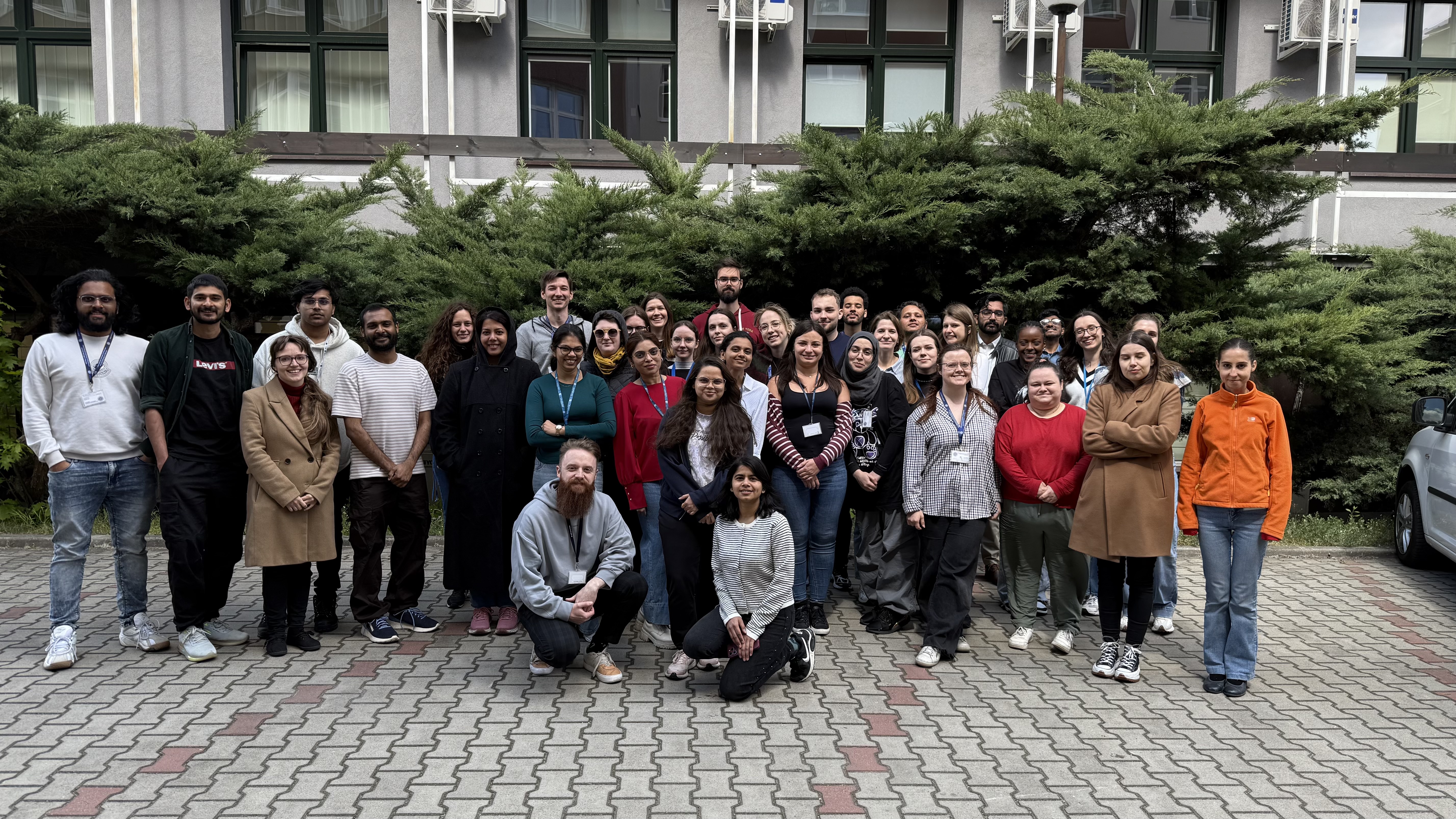
The PhD Students Council represents doctoral candidates from all laboratories at the International Institute of Molecular and Cell Biology in Warsaw (IIMCB). Acting as a vital link between students and the Institute’s authorities and administration, the Council supports the academic, professional, and social well-being of the PhD community.
Our Mission
• seminars and spotlight talks
• social and sporting events
• representation at internal and external meetings
• yearly Ph.D. students reporting session (outdoor)
PhD students at IIMCB pursue their degrees through the Warsaw PhD School in Natural and BioMedical Sciences (Warsaw-4-PhD) or in extramural mode. The Council brings these diverse paths together, creating a unified platform for engagement, representation, and mutual support.
Community and Social Life
We believe that strong science is built on strong community. To help students connect beyond the lab, the council organizes informal social gatherings, including seasonal highlights like BBQ party. These events provide a relaxed atmosphere for students to meet, unwind, and build lasting friendships.
Whether you're a current student, a prospective applicant, or simply curious about our activities, the PhD Students Council is here to help you feel connected, supported, and inspired.
If you are IIMCB PhD student and you would like to join us or to help organize events please contact PhD representatives:
Gabriela Piórkowska, gpiorkowska@iimcb.gov.pl
Girish Apte, gapte@iimcb.gov.pl

Międzynarodowy Instytut Biologii Molekularnej i Komórkowej w Warszawie (MIBMiK) powstał na mocy międzynarodowej umowy między Rządem RP a UNESCO. Formalnie został powołany ustawą sejmową z dn. 26 czerwca 1997 r., a swą faktyczną działalność rozpoczął w 1999 r.
Biuletyn Informacji Publicznej Międzynarodowego Instytutu Biologii Molerkularnej i Komórkowej redagują pracownicy administracji instytutu.
Zamówienia z dziedziny nauki
1. Dostawa regałów do hodowli ryb Danio rerio
Informacja o udzielonym zamówieniu. pdf.
2. Dostawa regału do hodowli ryb Danio rerio
Informacja o udzielanym zamówieniu.pdf
Informacja o nieudzieleniu zamówienia.pdf
3. Dostawa urządzenia służacego do określania ilości, jakości DNA, RNA i białek
Ogłoszenie o udzielanym zamówieniu.pdf
Ogłoszenie o udzieleniu zamówienia.pdf.
4. Dostawa systemu do hodowi ryb Danio rerio
Ogłoszenie o udzielanym zamówieniu.pdf.
Zał. nr 1 do ogłoszenia - Formularz oferty.pdf.
Zał. nr 2 do ogłoszenia - Szczegółowy opis przedmiotu zamówienia.pdf.
Zał. nr 3 do ogłoszenia - wzór umowy.pdf.
Zał. nr 4 do ogłoszenia - Plan pomieszczenia instalacji systemu.pdf.
Ogłoszenie o udzieleniu zamówienia.pdf.
5. Dostawa mikroskopu badawczego odwróconego do mikromanipulacji wraz z zestawem do mikromanipulacji - 1 szt.
Ogłoszenie o udzielanym ogłoszeniu.pdf.
Zał. nr 1 do ogłoszenia - Formularz oferty.pdf.
Zał. nr 2 do ogłoszenia - Szczegółowy opis przedmiotu zamówienia.pdf.
Zał. nr 3 do ogloszenia - Wzór umowy.pdf.
Ogłoszenie o udzieleniu zamówienia.pdf.
6. Dostawa odczynników do sekwencjonowania DNA
Ogłoszenie o udzielanym zamówieniu.pdf.
Ogłoszenie o udzieleniu zamówienia.pdf.
7. Dostawa chromatografu AKTA
Ogłoszenie o udzielanym zamówieniu.pdf.
Ogłoszenie o udzieleniu zamówienia.pdf.
8. Dostawa wypasażenia do stanowiska mikroskopowego
Ogłoszenie o udzielanym zamówieniu.pdf.
Ogłoszenie o udzieleniu zamówienia.pdf.
9. Modernizacja spektrometru masowego Amazon ETD firmy Bruker
Ogłoszenie o udzielanym zamówieniu.pdf.
Ogłoszenie o udzieleniu zamówienia.pdf.
10. Wygenerowanie linii trangenicznych ryb Danio rerio
Ogłoszenie o udzielanym zamówieniu.pdf.
Ogłoszenie o udzieleniu zamówienia.pdf.
11. Dostawa systemu do hodowli ryb Danio rerio
Ogłoszenie o udzielanym zamówieniu.pdf.
Ogłoszenie o udzieleniu zamówienia.pdf.
12. Dostawa stereoskopowego mikroskopu fluorescencyjnego LEICA wraz z wyposażeniem - 1 szt.
Ogłoszenie o udzielanym zamówieniu.pdf.
Zał. nr 1 do ogłoszenia - Formularz oferty: pdf, word.
Zał. nr 2 do ogłoszenia - Szczególowy opis przedmiotu zamówienia: pdf, word.
Zał. nr 3 do ogłoszenia - wzór umowy: pdf, word.
Ogłoszenie o udzieleniu zamówienia.pdf.
Zamówienia wyłączone ze stosowania ustawy Prawo Zamówień Publicznych na postawie art. 4 pkt. 8 i 8a
1. Dostawa urządzenia do obrazowania
Welcome to International Institute of Molecular and Cell Biology podcasts!
Today we launch a new era of our scientific dialogue with the society. And we join the international podcast community. We hope you will find our podcasts an interesting source of information on scientific issues. All our podcasts are in Polish, furthermore the lectures are perfectly intelligible for all human beings. For youngsters, for science lovers, for podcasts fans, for everyone ...
- "Life is a form of the protein existence" - an interview with prof. Bujnicki and dr. Nowotny (lab leaders in IIMCB) in the Polish Radio Programme 1 broadcast "Evening of Discoverers" [in Polish] (20.02.2012)
- "Godfathers of Polish bioinformatics mafia" - an interview with prof. Bujnicki (a lab leader in IIMCB), prof. Filipowicz, prof. Wlodawer (members of the IIMCB International Advisory Board), and prof. Minor in the Polish Radio Programme 1 broadcast "Evening of Discoverers" [in Polish] (21.11.2011)
WYKŁADY XXI WIEKU: WSPÓŁCZESNE POGLĄDY NA EWOLUCJĘ
- Prof. dr hab. Leszek Kuźnicki (Instytut Nenckiego PAN) - "Wprowadzenie"
- Prof. dr hab. Jerzy Dzik (Instytut Paleobiologii PAN) - "Bezpośrednie dowody ewolucji"
- Dr Marcin Ryszkiewicz (Muzeum Ziemi PAN) - "Paradoksy antropogenezy"
NOBEL 2006
CHOROBY RZĘSKOPOCHODNE
For the beginning, we are proud to present podcasts recorded during the meeting "All you should know about the Alzheimer disease" (Warsaw, November 13, 2006). Introduction about Alzheimer Disease and involvement of Polish scientists in European efforts to fight neurodegenerative diseases was delivered by Prof Jacek Kuznicki. The issue of diagnosis of Alzheimer Disease and genotyping were explained by Maria Styczynska, Ph.D. M.D. Neurochemical diagnosis of Alzheimer Disease was a topic of a lecture by Piotr Lewczuk, Ph.D., M.D., from Erlangen. Prof Maria Barcikowska lectured on immunotherapy of Alzheimer Disease. The meeting "All you should know about the Alzheimer disease" was organized within the framework of APOPIS, an Integrated Project funded by the EU under the Sixth Framework Programme, Priority: Life Sciences for Health, Contract No. LSHM-CT-2003-503330.
More info: http://www.verum-foundation.de/apopis
- Prof. dr hab. Jacek Kuźnicki: Wszystko, co powinniscie wiedziec o chorobie Alzheimera - wstęp
- Dr n. med. Maria Styczyńska: Diagnostyka genetyczna choroby Alzheimera
- Dr n. med. Piotr Lewczuk: Diagnostyka biochemiczna choroby Alzheimera
- Prof dr hab. n. med. Maria Barcikowska: Szczepionka przeciwko chorobie Alzheimera?
“Pathways of Store-Operated Calcium Entry (SOCE) as a novel
therapeutic target in neurodegenerative diseases”
TargetSOCE
ERA.Net RUS
Linking Russia to the ERA: Coordination of MS/AC S&T programmes
towards and with Russia
Pilot Joint Call for Collaborative S&T Projects

Project Partners
Prof. Jacek Kuźnicki (Coordinator), International Institute of Molecular and Cell Biology (IIMCB), Laboratory of Neurodegeneration
Prof. Axel Methner, Johannes Gutenberg University Medical Center Mainz (UM Mainz), Department of Neurology
Prof. Elena Kaznacheyeva, Institute of Cytology of the Russian Academy of Sciences (IC RAS), Laboratory of Ionic Channels of Cell Membranes
Project Consultant
Prof. Ilya Bezprozvanny, University of Texas, USA
News
September, 30 2014
TargetSOCE accomplishment
On September, 30th, TargetSOCE project has come to an end. The final project reports were submitted to the Joint Call Secretariat, and to the partnering countries’ national agencies. TargetSOCE was initiated to expand partners’ knowledge about the role of Ca2+ signaling in neurodegenerative disease and to strengthen ties of the three laboratories involved. Both these goals were reached, the groups published together 4 publications in well-renown journals, exchanged personnel, and met on a regular basis. The published and unpublished results are the basis of future projects, which are already developed.
September, 30 2013
By the end of September 2013, the first TargetSOCE year has been accomplished and the intermediate report was submitted to the Joint Call Secretariat from this period.
March, 31 2013
By the end of March 2013, the first 6 months of the TargetSOCE was realized and the first interim report was submitted to and accepted by the Joint Call Secretariat from this period.
February, 15th 2013
TargetSOCE project kick-off meeting took place at IIMCB. View pictures from the Meeting.
Prof. Jacek Kuźnicki, the project coordinator, hosted partners from abroad: Prof. Elena Kaznacheyeva with two young team members Dr. Alexey Shalygin and Maria Ryazanstseva from the Institute of Cytology of the Russian Academy of Sciences, Saint Petersburg, Russia and Prof. Axel Methner with Dima Lisak and Teresa Schacht from the University Medical Center of Johannes Gutenberg-University of Mainz, Germany. The event was inaugurated by an open seminar delivered by Prof. Kaznacheyeva and her colleagues. Further, partners discussed their so far research progress and planned future tasks and activities. Guests had opportunity to learn more about IIMCB, visit its laboratories, equipment premises and zebrafish core facility. At the kick-off a TargetSOCE Scientific Board meeting was organized with remote participation of the project consultant, Prof. Ilya Bezprozvanny from the Southwestern Medical Center at Dallas, USA.
October, 7th 2012
TargetSOCE partners concluded Consortium Agreement specifying the relationship among the partners, especially concerning the organization of work between them, the management of the projects and the rights and obligations of the partners with regard to liability, access rights, dispute resolution, etc.
July, 7th 2012
The Umbrella Agreement between Joint Call Secretariat and IIMCB on behalf of the Project consortium was signed. The Umbrella Agreement is a general agreement setting up regulatory framework for horizontal issues related to the transnational funding of the collaborative TargetSOCE research project.
TargetSOCE in a nutshell
There are no effective drugs to cure or to delay the progression of Alzheimer’s and Huntington’s diseases. It is clear that new target proteins respective pathways need to be addressed. TargetSOCE will respond to it by targeting calcium (Ca2+) homeostasis as a potential site for new treatments as both diseases are accompanied by profound changes in the intracellular Ca2+ homeostasis. Partners will study three transgenic mouse models, compare them and observe whether changes are specific for a certain pathological mechanism or are general downstream effects of neurodegeneration. In TargetSOCE, Russian, German and Polish groups complement one other. The expected results are highly relevant to prevailing neurodegenerative diseases in aging societies.
General information / aims of the project
Alzheimer’s disease (AD) is a progressive neurodegenerative disorder histopathologically defined by the extracellular deposition of the amyloid-β peptide, intracellular hyperphosphorylated neurofibrillary tangles, and selective neuronal loss. Huntington’s disease (HD) is a hereditary neurodegenerative disease caused by expression of a polyglutamine stretch in the protein Huntingtin. There are no effective drugs neither to cure these diseases, nor to delay their progression. It is clear that new target proteins pathways need to be addressed. We propose to approach this problem by targeting calcium (Ca2+) homeostasis as a potential site for new treatments as both diseases are accompanied by profound changes in the intracellular Ca2+ homeostasis. We hypothesize that changes in the function or abundance of the Ca2+ machinery at the endoplasmic reticulum (ER) result in changes in Store-Operated Calcium Entry (SOCE) and that this initiates or propagates the neurodegenerative process in AD and HD. We then hypothesize that genetic or pharmacological manipulation of SOCE alters or even ameliorates the course of disease. Thus, our research objective is to verify these hypotheses by the specific aims:
1) To systematically determine changes in the amount and function of the major players of the ER Ca2+ machinery in the brain of different transgenic mouse models for AD and HD;
2) To determine the cell death susceptibility of primary neurons from transgenic mouse models for AD and HD in response to different stressors involved in the pathophysiology of the disease;
3) To develop and evaluate genetic and pharmacological tools to alter changes in Ca2+ homeostasis involved in these models.
We will study these aims in three transgenic mouse models overexpressing mutated Amyloid Precursor Protein, Presenilin1, or expanded Huntingtin. We will investigate changes in the expression of proteins relevant for the ER Ca2+ machinery and study Ca2+ handling of different organelles with its consequences for the intrinsic function of neurons, the propagation of electrical signals. We will develop the genetic and pharmacological tools needed to alter changes in Ca2+ homeostasis and study their effects on cell death and on electrophysiological function of neurons. These studies aim to clarify the role of SOCE in AD and HD. We expect changes in the amount and function of some ER Ca2+ players such as Ca2+ release channels, ER Ca2+ pumps or STIM proteins, which are ER sensor proteins that activate SOCE. Moreover, we expect to identify genetic or pharmacological tools to correct the dysregulated Ca2+ homeostasis. Direct comparison of different mouse models will reveal whether the observed changes are specific for a certain pathological mechanism or general downstream effects of neurodegeneration. In TargetSOCE Russian, German and Polish groups complement one another. The aim and expected results are highly relevant taken into account the prevalence of neurodegenerative diseases in aging societies.
Project tasks
Axel Methner lab, Mainz, Germany
Task 1: To determine the abundance of key proteins of the Ca2+ machinery in brains from transgenic mouse models for AD and HD
Task 2: To determine changes in the intracellular Ca2+ homeostasis of primary neurons from transgenic mice expressing mutant APP and expanded Huntingtin
Task 3: To determine cell death susceptibility of primary neurons from transgenic mouse models for AD and HD
Elena Kaznacheyeva lab, St. Petersburg, Russia
Task 4: To determine changes in the SOC and L-type currents of primary neurons from transgenic mice expressing expanded Huntingtin and mutant PS1.
Task 5: To determine the effect of genetic tools evaluated by JK and quinazoline-derived compounds on Ca2+ currents in HD and PS1 neurons
Task 6: To determine the target of quinazoline-derived compounds by knockdown of proteins upregulated in HD and PS1 neurons on SOC currents of primary HD and AD neurons
Jacek Kuznicki lab, Warsaw, Poland
Task 7: To determine changes in the intracellular Ca2+ homeostasis of primary neurons from mice expressing mutant PS1
Task 8: Identification of pharmacological and genetic tools modifying SOCE in neurons
Task 9: Analysis of Ca2+ homeostasis in cultured neurons from mouse models using selected shRNA or drug(s) affecting SOCE
Project budget
The overall implementation and administration of the project is assured by the Era.Net-Rus General Secretariat. However, the operational management and the financing was entrusted to national agencies/institutions of the countries which participate in the Era.Net-Rus initiative.
Thus, the TargetSOCE partners receive support from the following national institutions:
IIMCB - National Centre for Research and Development
IC RAS - Russian Academy of Sciences
UM Mainz - Federal Ministry for Education and Research in Germany (minor support)
Project duration
24 months: October, 1st 2012 – September, 30th 2014
Project management and contact
Project coordinator: Prof. Jacek Kuźnicki, This email address is being protected from spambots. You need JavaScript enabled to view it.
Project manager: Dorota Libiszowska, This email address is being protected from spambots. You need JavaScript enabled to view it.
Scientific Board: Prof. Jacek Kuźnicki, Prof. Axel Methner, Prof. Elena Kaznacheyeva, Prof. Ilya Bezprozvanny
 Health-Prot Website
The project is targeted at continuation and expansion of activities initiated as the FP5 Centre of Excellence in Molecular Bio-Medicine (CEMBM). In the past as the Centre of Excellence we developed an advanced methodology of analysis of complex protein structures with the use of cell and molecular biology techniques, biochemical methods, crystallographic analysis and computer modelling. Our goal is to become a top protein studies Centre in the region by unlocking the potential of all our research groups. This will be achieved mainly by twinning each of the Institute's groups with European groups leading in the field (first objective), through joint research activities, organization of workshops and conferences and participation in consortia within FP7.
We plan to create the place for experienced scientist to conduct research at the highest level (second objective), and for junior scientists to obtain the best possible mentoring and a degree based on the top-flight theses. We also intend to reach an ultimate critical mass by completing the organisation of IIMCB's structure (third objective). We aspire to be more innovative towards applications in medicine and biotechnology (fourth objective). In parallel, we will popularize science and raise social awareness of the benefits of modern biology and biotechnology (fifth objective). We will leverage the activities of the existing professional popularization science unit and use the available electronic media to disseminate knowledge on protein research. Ultimately, a reinforced S&T potential of our research groups will allow us to become more visible and attractive as a collaborating partner in the European Research Area, for both academia and industry.
Auresine Project 
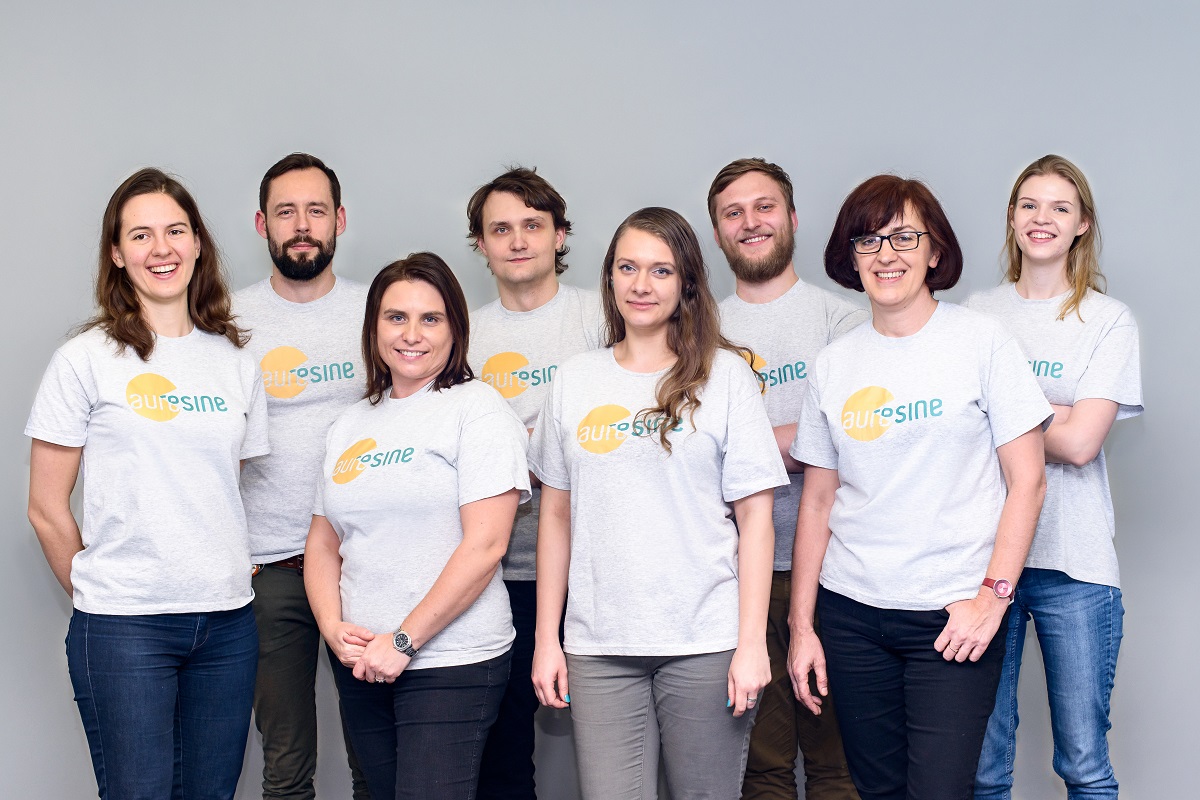
Izabela Sabała, PhD
Senior Scientist
Elżbieta Jagielska, PhD
Piotr Małecki, PhD
PhD Students
Paweł Mitkowski, MSc
Alicja Wysocka, MSc
Weronika Augustyniak, MSc
MSc students
Karolina Trochimiak
Piotr Bartosz
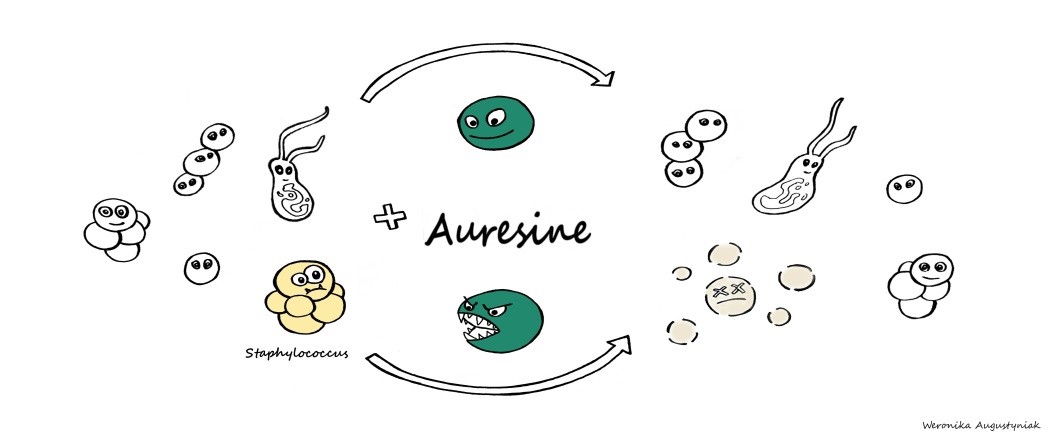
Our research is focused on bacteriolytic enzymes that in a very selective and effective way eliminate staphylococcal cells from various environments. We are working on development of commercial applications for such enzymes, especially for a patented one - Auresine®. These enzymes can be used in diagnostic tests, as a food bioprotectant, to decontaminate various surfaces in industry and hospitals, and as a component of hygiene products for animals and humans. Thanks to results of our basic research we are able to address very practical issues, like development of resistance, tolerance to environmental conditions, protein stability. Structural and biochemical characterization of enzymes broaden our knowledge about their activity regulation and determination of enzyme specificity, and also provide a scientific basis for structure-designed enzyme engineering.
Main achievements in 2018:
1. In December 2017 we have launched TeamTech project (Foundation for Polish Science program), which is focused on developing new-generation wound dressings that are functionalized with bacteriolytic enzymes. We have completed building up the project team and also the network of external experts, who support our efforts in the area of nanomaterials.
2. We were awarded a grant in International Academic Partnerships program funded by the Polish National Agency for Academic Exchange (NAWA). The MolSpec project “Molecular basis of enzyme specificity and applications”, will be carried out in collaboration with the Trinity College Dublin (Ireland), the Applied Molecular Biosciences Unit of the Department of Life Sciences FCT-NOVA (Portugal) and with the Fraunhofer Institute for Silicate Research (Germany).
3. Our team completed three Quest for Commercialization grants (founded by IIMCB) to leverage commercialization of Auresine. They allowed us, among others:
• to establish very simple and effective technology for one step, large scale purification of our recombinant enzyme
• to get international trademark protection of the name and the graphic logo of Auresine®
• to prepare new, professional webpage dedicated to Auresine project (www.auresine.com) illustrated by our technician Weronika Augustyniak
4. We continue collaboration with our business partners to test the implementation of Auresine in industry and also with global supplier of R&D chemicals on worldwide distribution of Auresine®.
5. We have established collaboration with the global supplier of veterinary products interested in implementation of our enzymes in their innovative products.
6. Our research has been presented at prestigious international meetings:
• EMBO Workshop on Bacterial Persistence and Antimicrobial Therapy, Ascona, Switzerland
• EMBO Workshop Viruses of Microbes, Wrocław, Poland
• 18th International Symposium on Staphylococci and Staphylococcal Infection, Copenhagen, Denmark
• The Lysin Meeting: 2nd International Symposium on Antimicrobial Hydrolytic Enzymes, Rockefeller University, New York, USA,
• Bessy User Meeting, 2018, Berlin, Germany.
Ongoing Projects:
TEAM TECH (FNP) “INFECTLESS: New generation of antibacterial wound dressing” click here for more information.
MolSpec (Polish National Agency for Academic Exchange, NAWA) “Molecular basis of enzyme specificity and applications”.