




We study the molecular and cellular roles of calcium, potassium and ferrum and associated molecules in development and in nervous system pathologies. Our main focus is neurodegeneration in Parkinson disease (PD), as well as epileptic encephalopathy, hearing loss, and retinal pathology. We use cultured iPSC-derived human neurons and zebrafish models of these pathologies.
Research Summary
PD is an incurable neurodegenerative disorder. Its pathological hallmarks include alpha-synuclein aggregation and loss of dopaminergic neurons. In various PD animal models and in cells from PD patients, calcium and iron ions homeostasis is perturbed. Our major research focus is on Ca2+-dependent mechanisms and Fe2+-dependent ferroptosis involved in the development of PD.
There are three types of PD : the most prevalent sporadic PD form with late onset, familial PD caused by mutations in genes such as PINK1 or LRRK2, and environmentally induced PD caused by exposure to toxic agents such as MPTP or rotenone.
Our published data show that degeneration of dopaminergic neurons in zebrafish PD models caused by the pink1 mutation or MPTP toxicity can be rescued by inactivation of the mitochondrial calcium uniporter (MCU). This membrane transport protein moves calcium ion across a cell membrane down its concentration gradient without using cellular energy (ATP). Other studies have shown that MCU inhibition also rescues neurons carrying an LRRK2 mutation.
If different factors that cause PD have a common denominator related to MCU activity, it is essential to understand the mechanism of this protection. Our hypothesis is that MCU inactivation turns specific genes on or off, probably including genes involved in ferroptosis, thereby supporting the survival of dopaminergic neurons. The main goal of the project is to identify ferroptosis-associated genes that are dysregulated in pink1 and lrrk2 PD zebrafish models and in human iPSC-derived neurons upon rescue of dopaminergic neurons by MCU inactivation.
Scientific Impact
- We showed that the loss of dopaminergic neurons in PD zebrafish models can be delayed by inhibiting the mitochondrial calcium uniporter (MCU).
- We showed that the loss of the Ca2+ sensor Stim2 in zebrafish induces a glaucoma-like phenotype.
- Research on calcium and iron homeostasis may help identify mechanisms responsible for PD pathology.
- Parkinson disease research in the Laboratory of Neurodegeneration received a private donation of PLN 1 million.
- Prof. Jacek Kuźnicki received the Minister of Science and Higher Education Award for lifetime achievements.
Future Goals
- The developmental role of identified MCU-regulated genes induced during ferroptosis will be studied using the PD patient-derived iPS cells and the zebrafish disease models.
- We will analyze the molecular mechanisms responsible for the loss of retinal ganglion cells in stim2 zebrafish knockout models.
- We will identify the regulatory regions of the human SLC26A4 gene, which encodes Pendrin , a sodium-independent chloride-iodide ion exchanger, whose polymorphism has been associated with CEVA (Caucasian Enlarged Vestibular Aqueduct), a common inner ear abnormality causing sensorineural hearing loss.
Comment
"In various animal models of Parkinson disease and in cells from PD patients, perturbations of calcium and iron homeostasis occur. Studying these processes may identify mechanisms responsible for PD pathology. We use iPSC-differentiated dopaminergic neurons and zebrafish with Pink1 and Lrrk2 mutations." - Prof. Jacek Kuźnicki

The graphical abstract presents the research hypothesis showing how inactivation of the MCU may protect dopaminergic neurons. Illustration: Prof. Jacek Kuźnicki.
Publications and preprints from this group
Browse publications →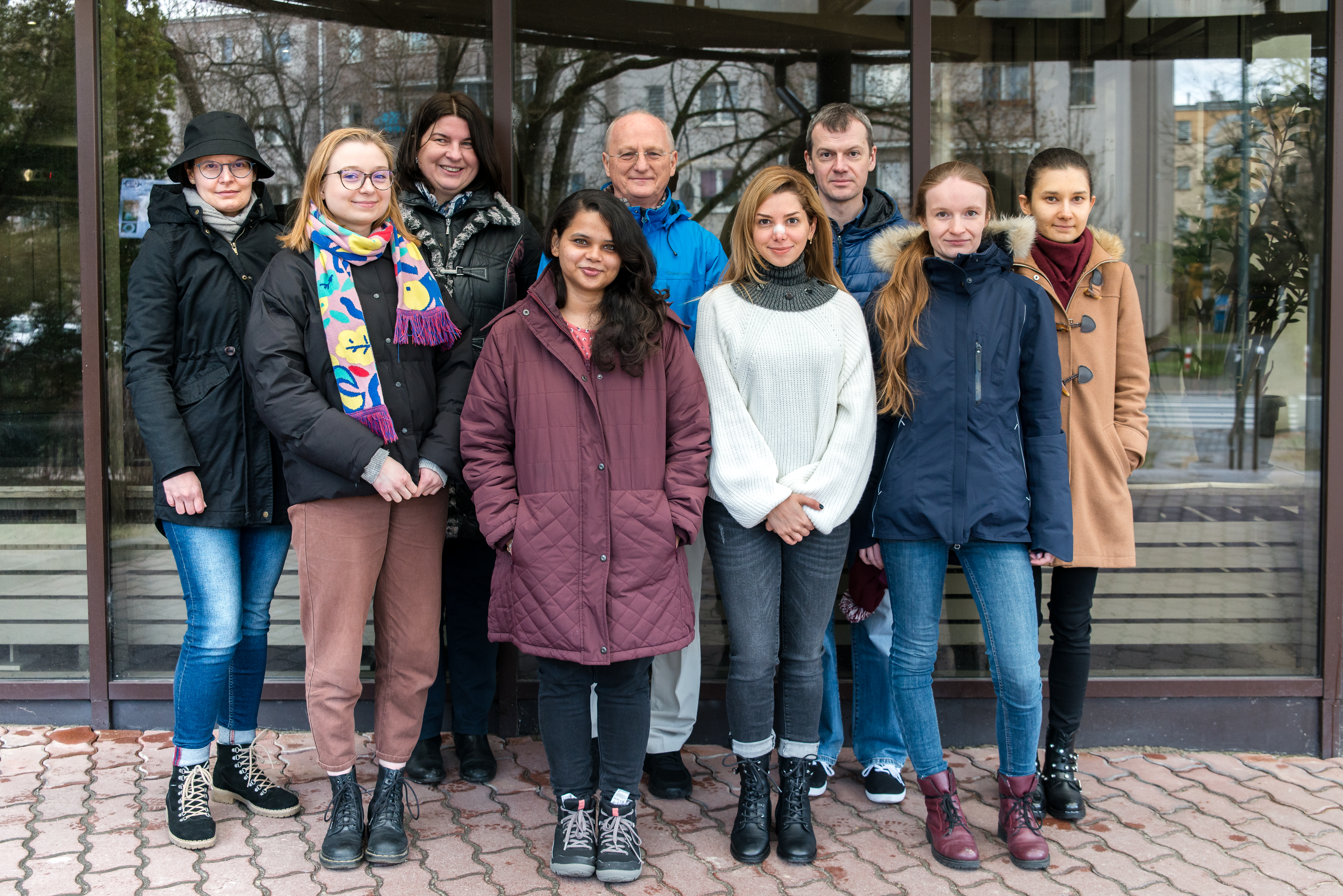
Lab Leader
Jacek Kuźnicki, PhD, Professor
Senior Researchers
Vladimir Korzh, PhD, DSc Habil
Postdoctoral Researchers
Weronika Skarżyńska, PhD
Narges Sotoudeh, PhD
Krystyna Żyżyńska-Galeńska, PhD
PhD Students
Sofiia Baranykova, MSc
Research Assistants
Aleksandra Moskal, MSc
Volunteers
Magdalena Czeredys, PhD, DSc Habil (from Mossakowski Medical Research Institute PAS)
Iga Wasilewska, PhD (from Mossakowski Medical Research Institute PAS)
Lab Technician
Monika Matuszczyk (part-time)
Laboratory Support Specialist
Dominika Dubicka, MSc
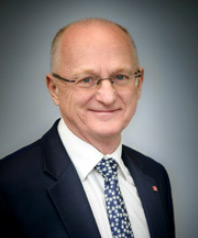 |
Professor Jacek KuźnickiCorrespondence address: |
DEGREES
1993 - Professor, awarded by the President of the Republic of Poland
1987 - DSc. Habil., Nencki Institute of Experimental Biology PAS, Warsaw, Poland
1980 - PhD in biochemistry, Nencki Institute of Experimental Biology PAS, Warsaw, Poland
1976 - MSc in biochemistry, Faculty of Biology, University of Warsaw, Poland
PROFESSIONAL EXPERIENCE
2001-present - Professor, Head of Laboratory of Neurodegeneration, International Institute of Molecular and Cell Biology in Warsaw, Poland
2020-2022 - President of the National Science Centre Council, member 2018-2022
2001-2018 - Director, International Institute of Molecular and Cell Biology in Warsaw, Poland; Feb-Dec 2018 Acting Director, International Institute of Molecular and Cell Biology in Warsaw, Poland
2017-2018 - Deputy Chair of the Council of Provosts, 2nd Division: Biological and Agricultural Sciences, Polish Academy of Sciences
2000-2001 - Director, Centre of Excellence Phare Sci-Tech II, Nencki Institute of Experimental Biology, Polish Academy of Sciences, Warsaw, Poland
1999-2001 - Acting Director, International Institute of Molecular and Cell Biology in Warsaw, Poland; Organizer and Director, Centenarian Program
1996-2002 - Head, Laboratory of Calcium Binding Proteins, professor 2002- 2014 Nencki Institute of Experimental Biology, Polish Academy of Sciences, Warsaw, Poland
1992-1995 - Visiting Professor, NIMH, Bethesda, MD, USA
1991-1992 - Deputy Scientific Director, Nencki Institute of Experimental Biology, Polish Academy of Sciences, Warsaw, Poland
1986-1992 - Associate Professor and Head of Laboratory of Calcium Binding Proteins, Nencki Institute of Experimental Biology, Polish Academy of Sciences, Warsaw, Poland
1984-1985 - Research Associate, Nencki Institute of Experimental Biology, Polish Academy of Sciences, Warsaw, Poland
1981-1984 - Visiting Fellow, NIH, Bethesda, MD, USA
1980-1981 - Postdoctoral Fellow, Nencki Institute
1976-1980 - PhD Student, Nencki Institute of Experimental Biology PAN, Warsaw
PROFESSIONAL TRAINING
2018, July - Visiting Professor, Laboratory of H. Burgess, National Institute of Child Health and Human Development, Bethesda, MD, USA
2015, July - Visiting Professor, Laboratory of W. Harris, University of Cambridge, UK
2014, July - Visiting Professor, Laboratory of B.E. Snaar-Jagalska, Leiden University, The Netherlands
1992-1995 - Visiting Professor, Laboratory of D. Jacobowitz, National Institute of Mental Health, Bethesda, MD, USA
1981-1984 - Visiting Fellow (postdoc), Laboratory of E.D. Korn, National Institute of Heart, Lung and Blood, Bethesda, MD, USA
MEMBERSHIP IN SCIENTIFIC SOCIETIES, ORGANIZATIONS, AND PANELS
2020-present - External expert in biotechnology, Łukasiewcz Research Network - PORT Polish Center for Technology Development
2020-present - Ordinary Member, Polish Academy of Sciences
2016-2021 - Member, International Advisory Board, Małopolska Centre of Biotechnology, Jagiellonian University
2011-present - Member, International Expert Council of the Research and Education Center, State Key Laboratory of Molecular and Cellular Biology, Ukraine
2011-2014 - Member, Science Policy Committee, and Rotating President (Jul-Dec 2012), Ministry of Science and Higher Education
2008-2022 - Board Member, European Calcium Society, member since 1997
2008-2018 - Member, Board of Directors, and Rotating President (Jul-Dec 2016, Jul-Dec 2013, Jul-Dec 2010), Biocentrum-Ochota Consortium
2006-2011 - Member, Advisory Group, 7FP HEALTH, European Commission
2004-2019 - Corresponding Member, Polish Academy of Sciences
2004-present - Honorary Chair and co-founder, BioEducation Foundation
2002-present - Head of Program Board, Centre for Innovative Bioscience Education
1993-2014 - Member, Scientific Council, Nencki Institute of Experimental Biology, Polish Academy of Sciences
1996-1998 & 2000-2002 - Vice-President, Biotechnology Committee, Polish Academy of Sciences
1989 - 1991 - General Secretary, Polish Biochemical Society, member since 1977
HONORS, PRIZES AND AWARDS
2018 - Commemorative medal for the 100th Anniversary of the Nencki Institute for outstanding contribution to the development of this Institute, supporting its activities, shaping the image and building a mutual success
2013 - Crystal Brussels Prize for outstanding achievements in 7th Framework Programme of the European Union for Research and Development
2013 - Award from the 2nd Division of Biological and Agricultural Sciences, Polish Academy of Sciences for series of works on β-catenin
2011 - Konorski Award for the best Polish research work in neurobiology awarded by the Polish Neuroscience Society and Committee on Neurobiology of the PAS
2008 - Officer's Cross of the Order of Polonia Restituta awarded by the President of Poland
2004-2007 - Professorial Subsidy Program Award from Foundation for Polish Science
2003 - Prime Minister Award for the scientific achievements, Warsaw
2001 - Award from the Division of Biological Sciences of the PAS for the work on CaBP
1998 - Knight's Cross of the Order of Polonia Restituta awarded by the President of Poland
1987 - Polish Anatomical Society Award for the article in “Advances in Cell Biology”
1986 - Skarzynski Award from the Polish Biochemical Society for the best review article in “Advances in Biochemistry”
1977 - Mozolowski Award, Polish Biochem. Society for outstanding Polish young biochemist
1977 - Parnas Award from Polish Biochem. Society for the best paper in biochemical research
1976 - MSc, Magna cum laude, University of Warsaw
DOCTORATES DEFENDED UNDER LAB LEADER’S SUPERVISION
A. Filipek, J. Kordowska, U. Wojda, J. Hetman, M. Palczewska, M. Nowotny, K. Billing-Marczak, Ł. Bojarski, W. Michowski, K. Misztal, M. Figiel, K. Honarnejad, A. Jaworska, K. Gazda, F. Maciąg, J. Jędrychowska, I. Wasilewska, RK. Gupta.