




We study the functional links between two key intracellular processes: endocytosis and receptor signaling. We seek to understand how cells take up, transport, sort, and process different substances and signals, and how these rules of cellular logistics change under pathological conditions, such as cancer or selected rare diseases. We focus particularly on ESCRT complexes and AXL-dependent macropinocytosis, because disturbances in these processes may reveal vulnerabilities that can be exploited in targeted therapies.
Research Summary
We are fascinated by how endocytosis and receptor signaling cooperate in healthy cells and in disease states. We investigate how endosomal compartments influence receptor trafficking and signaling, and how alterations in these processes support cancer progression or contribute to the pathogenesis of rare genetic diseases.
One major research direction concerns the roles of endosomal sorting complexes required for transport, or ESCRT complexes, in cell physiology and oncogenesis. We have shown that endosomal dysfunction caused by loss of proper ESCRT function induces three types of cellular responses: sterile inflammatory signaling, lysosome biogenesis, and metabolic reprogramming towards enhanced use of extracellular nutrients. Together, these findings demonstrate a broad role of ESCRT complexes in coordinating membrane trafficking, signaling, and metabolism.
The synthetic lethality we identified between two paralogous ATPases of the ESCRT machinery, VPS4A and VPS4B, has uncovered a new pair of potential therapeutic targets for personalized oncology. We also investigate how mutations in ESCRT components found in rare neurological disorders alter cellular functions and may underlie disease pathogenesis.
In a separate line of research, we focus on macropinocytosis, one of the least characterized routes of endocytic cargo internalization. This pathway is nevertheless crucial for nutrient acquisition by cancer cells. We discovered that the AXL receptor tyrosine kinase, a receptor frequently overexpressed in late-stage and therapy-resistant cancers, is a potent inducer of macropinocytosis.
Upon activation by its ligand GAS6, AXL drives extensive actin cytoskeleton remodeling, promoting the formation of dynamic membrane ruffles. These ruffles extend and close to generate macropinosomes - large, irregular vesicles containing extracellular fluid and associated cargo, such as nutrients, growth factors, and membrane receptors. Newly formed macropinosomes subsequently mature through sequential fusion and fission events with endosomal compartments, enabling the sorting, degradation, or recycling of internalized material. Building on our identification of AXL-interacting proteins, we are currently characterizing the effectors and regulators that mediate macropinocytosis.
Scientific Impact
Our studies provide proof of concept that intracellular trafficking and the molecules regulating it can represent viable therapeutic targets in personalized oncology. For example, the synthetic lethality between VPS4A and VPS4B ATPases provides a rationale for developing VPS4 inhibitors for the precision treatment of VPS4B-deficient cancers.
At the same time, our ongoing studies of AXL-dependent macropinocytosis aim to uncover ways of blocking this process in metastatic and drug-resistant cancers with AXL overexpression. Work on mutations in ESCRT components found in rare neurological diseases also helps explain how disrupted cellular logistics can translate into pathology at the cellular and tissue levels.
Future Goals
We wish to understand how altered expression or mutations of ESCRT components, observed in cancer and some rare diseases, modify cell physiology. In parallel, we aim to elucidate the mechanisms and effector proteins by which the activated AXL receptor drives macropinocytosis and fuels cancer-cell growth.
Collaborations
We collaborate with partners from IIMCB and external institutions within the HERO consortium project, which aims to develop the next generation of mRNA-based cancer immunotherapies. Prof. Marta Miączyńska also coordinates the research area focused on advanced models of rare diseases in RACE-PRIME, a project aimed at developing innovative therapeutic strategies for diseases where current treatment options remain inadequate or unavailable.
Comment
In 2024-2025, we continued to study the principles of cellular logistics: how cells take up and transport various substances within their interior, and which signals initiate these processes. Our aim was to understand how these trafficking rules are altered in disease, for example, in cancer cells with increased metabolic demands or in cells carrying mutations that cause rare genetic disorders. We believe that elucidating these underlying mechanisms can ultimately guide the development of new therapeutic strategies. - Prof. Marta Miączyńska
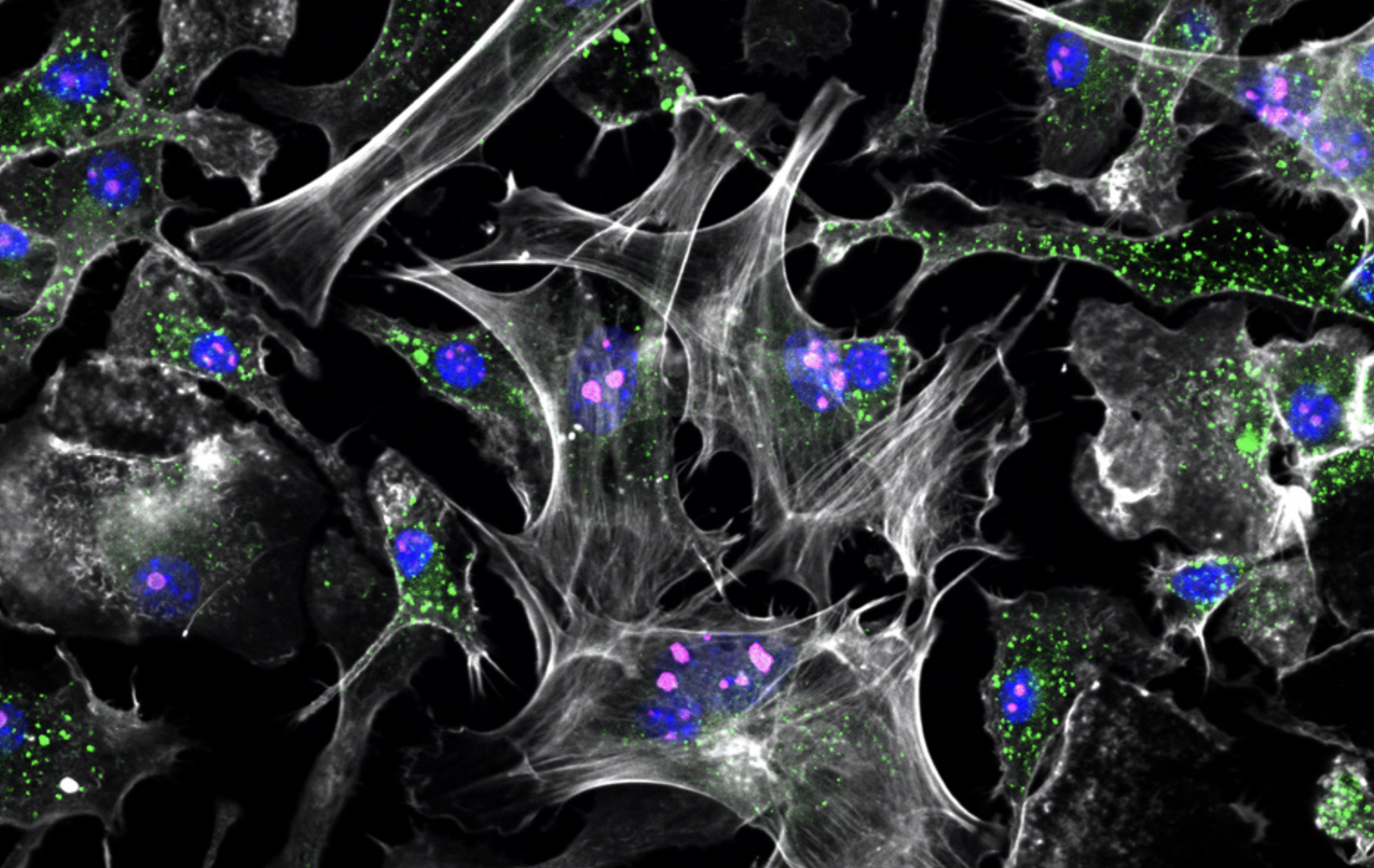
Murine bone marrow-derived macrophages cultured in vitro. Nuclei are stained blue, endosomes green, nucleoli magenta, and actin gray. Image by Patrycja Daszczuk.
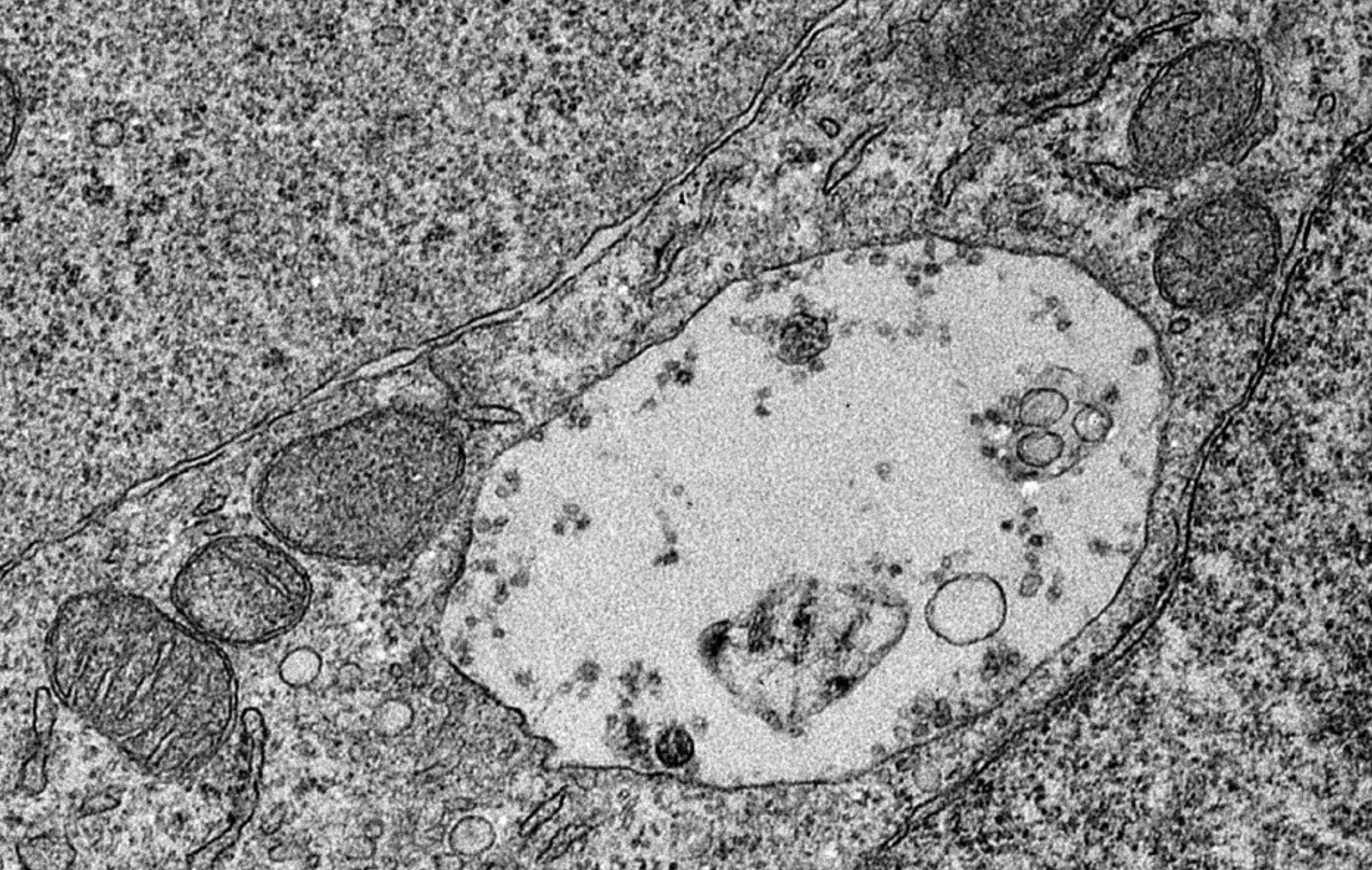
Transmission electron microscopy image of membrane organelles - a multivesicular endosome containing internal vesicles and mitochondria - in a HEK293 cell. Image by Ewelina Szymańska, Matylda Macias, Aleksandra Szybińska.
Publications and preprints from this group
Browse publications →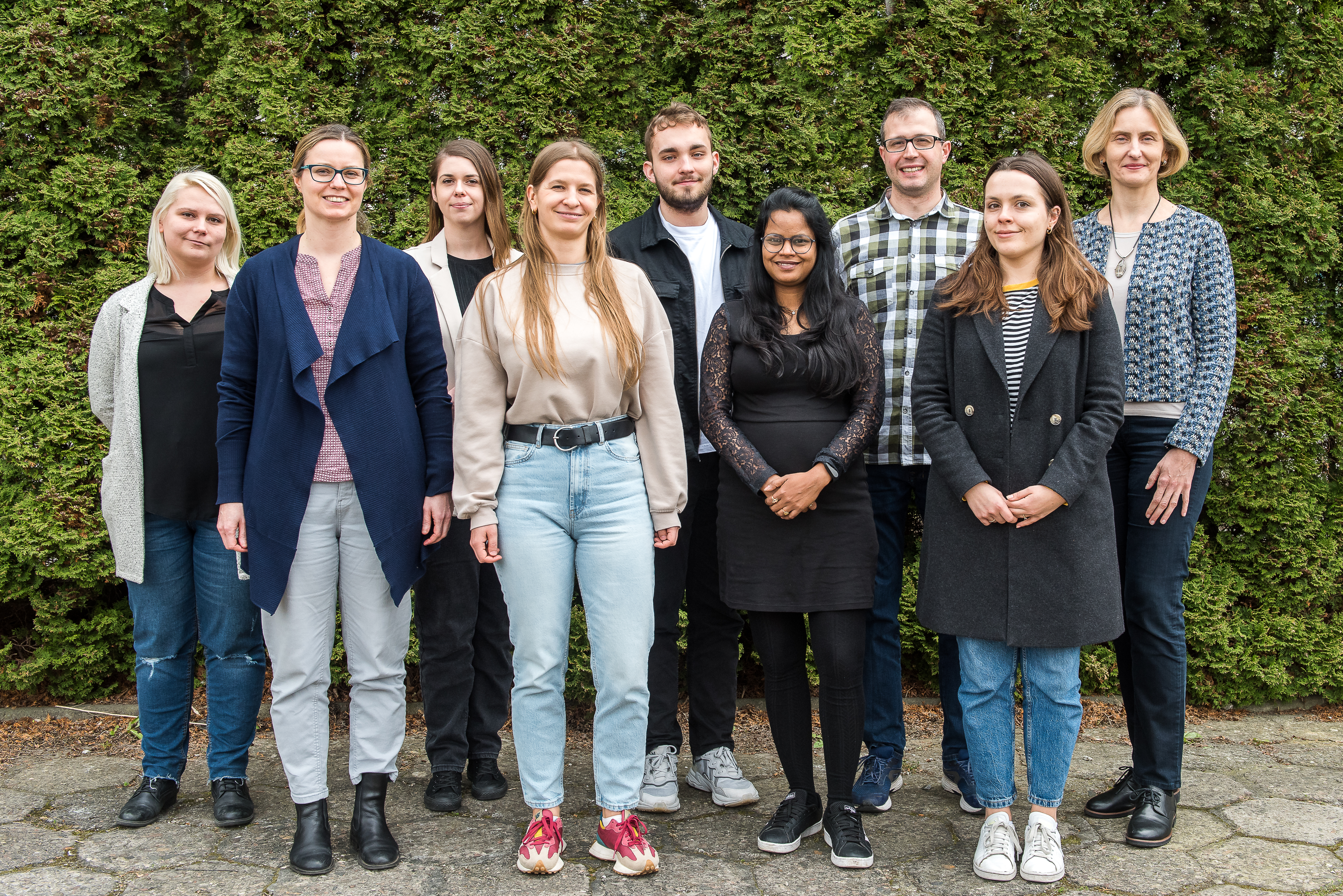
Lab Leader:
Marta Miączyńska, PhD, Professor
Senior Researcher:
Ewelina Szymańska, PhD
Postdoctoral Researchers:
Patrycja Daszczuk, PhD
Ranjana Maurya, PhD
PhD Students:
Marta Chwałek, MSc
Malwina Grębowicz-Maciukiewicz, MSc
Bartosz Jary, MSc
Zuzanna Miciak, MSc
Research Assistant:
Agnieszka Świstek, MSc
Master's Students:
Anna Witowska (BSc)
Lab Technician:
Monika Matuszczyk (part-time)
Laboratory Support Specialist:
Renata Wyszyńska, MSc
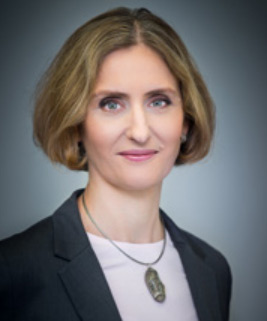 |
Marta Miączyńska, PhD, ProfessorCorrespondence address: |
DEGREES
2013 - Professor of Biological Sciences, nominated by the President of the Republic of Poland
2008 - DSc Habil in Cell Biology, Nencki Institute of Experimental Biology, Polish Academy of Sciences, Warsaw, Poland
1997 - PhD in Genetics, University of Vienna, Austria
1993 - MSc in Molecular Biology, Jagiellonian University, Cracow, Poland
1991 - BSc in Biological Sciences, University of Wolverhampton, UK
PROFESSIONAL EMPLOYMENT
2018-present - Director, International Institute of Molecular and Cell Biology in Warsaw, Poland
2014-2015 - Deputy Director for Science, International Institute of Molecular and Cell Biology in Warsaw, Poland
2013-2014 - Deputy Director, International Institute of Molecular and Cell Biology in Warsaw, Poland
2005-present - Professor, Head of Laboratory of Cell Biology, International Institute of Molecular and Cell Biology in Warsaw, Poland
RESEARCH TRAINING
2001-2005 - Senior Postdoctoral Fellow, Max Planck Institute for Molecular Cell Biology and Genetics (MPI-CBG), Dresden, Germany
1997-2000 - Postdoctoral training, European Molecular Biology Laboratory, Heidelberg, Germany
1993-1996 - PhD studies, Institute of Microbiology and Genetics, University of Vienna, Austria
1990-1991 - Exchange Student, University of Wolverhampton, UK
HONORS, PRIZES AND AWARDS
2024 - Vice Chair of the EMBO Council
2024 - Co-Chair of EU-LIFE Alliance
2021 - Prime Minister's Award for outstanding scientific achievements
2021 - Member, EMBO Council
2020 - Corresponding Member, Polish Academy of Sciences
2019 - Member, Academia Europaea
2017 - Member, European Molecular Biology Organization
2016-2018 - Member, Council of the National Science Centre
2016 - TEAM, Foundation for Polish Science
2012 - MAESTRO, National Science Centre
2011 - Polish-Swiss Research Programme grant
2007 - Habilitation Fellowship of L’Oréal Poland for Women in Science
2006-2012 - International Senior Research Fellowship, Wellcome Trust
2006-2010 - International Research Scholar, Howard Hughes Medical Institute, USA
2006-2010 - Partner Group grant, Max Planck Society, Germany
2001-2004 - Postdoctoral Fellowship, Max Planck Society, Germany
1999-2000 - Long-Term Postdoctoral Fellowship, Human Frontier Science Program Organization
1998-1999 - Erwin Schrödinger Postdoctoral Fellowship, Austrian Science Fund
1993-1996 - Bertha von Suttner PhD Scholarship, Austrian Ministry of Science
1990-1991 - Studentship, European Community Tempus Scheme
DOCTORATES DEFENDED UNDER LAB LEADER’S SUPERVISION
M. Olchowik, A. Urbańska, A. Hupałowska, Ł. Sadowski, A. Mamińska, A. Toruń, K. Jastrzębski, M. Maksymowicz, K. Wojciechowska, A. Poświata, M. Wróbel.