




Our group studies systems that process genetic information in living cells. This information is encoded in DNA and RNA. Dedicated protein machines in the cell read this information, maintain its stability, and copy it. To understand how they work, we study these machines at the level of individual atoms. For example, we have determined the molecular mechanisms of machineries that repair chemically damaged DNA.
Research Summary
We use structural biology, mainly cryo-electron microscopy, as well as protein crystallography and protein biochemistry, to elucidate the mechanisms of enzymes involved in processing genetic information encoded in DNA and RNA. In particular, we study DNA repair and transposition, reverse transcription, viral replication, RNA processing, tRNA ligases, and bacterial antiphage systems.
In our recent work, we determined the molecular architecture of a key complex in one of the major DNA repair pathways in bacteria: homologous recombination. This complex, composed of the RecF, RecR, and RecO proteins, is responsible for forming a RecA protein filament on single-stranded DNA. This filament promotes the search for homologous DNA during repair.
We also study UvrA, a vital component of the bacterial nucleotide excision repair pathway. We have demonstrated that ATP-driven conformational changes in UvrA mechanically probe DNA flexibility, an increase in which may indicate the presence of damage. These results point to a new paradigm in DNA repair: damage localization through mechanical probing of the integrity of the double helix.
We have also determined the structures and mechanisms of unusual reverse transcriptases involved in antiphage defense, including AbiK, Abi-P2, AbiA, and UG10/DRT7. These enzymes are unique because they synthesize long stretches of single-stranded DNA in a template- and primer-independent manner. They initiate synthesis by covalently attaching the first nucleotide to a tyrosine residue.
Scientific Impact
Our research has explained how the bacterial homologous recombination complex RecFOR participates in DNA repair and how UvrA recognizes DNA damage by mechanically probing the double helix. These studies provide a detailed structural description of key stages in bacterial DNA repair.
We also determined the structure and mechanism of the bacterial reverse transcriptase AbiA, which is involved in defense against bacteriophages. These findings expand current knowledge of unusual antiphage reverse transcriptases and show how these enzymes can synthesize DNA without a template or primer.
In recent years, the laboratory has also obtained structural insights into the vertebrate tRNA ligase complex and mechanisms of DNA replication in herpesviruses. These studies support the laboratory's broader goal: to explain the molecular foundations of the processes responsible for reading, maintaining, and copying genetic information.
Future Goals
In the near future, we will continue our studies on DNA repair and transposition. We aim to fully elucidate the mechanism of action of the RecFOR complex and understand how antiphage reverse transcriptases function in vivo in bacterial cells. In parallel, we will further develop our work on reverse transcriptases, tRNA ligases, and DNA replication in herpesviruses.
Comment
"Our current research activities focus on processing information encoded in DNA and RNA. For instance, we study DNA repair in bacteria, the mechanisms of reverse transcriptases and tRNA ligases, and DNA replication in herpesviruses. We use cryo-electron microscopy, protein crystallography, and protein biochemistry to elucidate the molecular basis of these processes and mechanisms." - Marcin Nowotny, PhD, Professor
Publications and preprints from this group
Browse publications →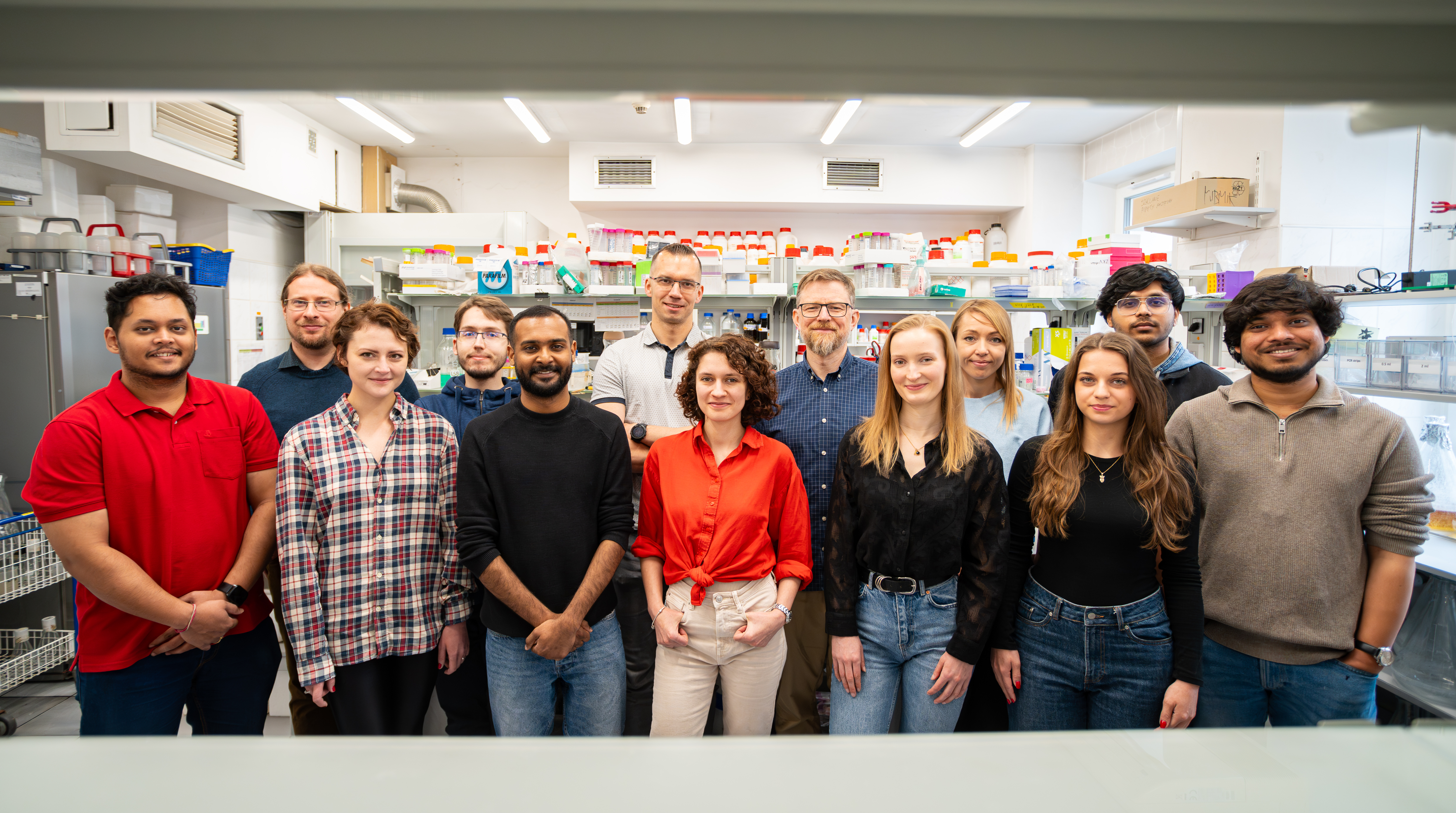
Lab Leader
Marcin Nowotny, PhD, Professor
Postdoctoral Researchers
Supreet Bhattacharya, PhD
Mariusz Czarnocki-Cieciura, PhD
Małgorzata Figiel, PhD
Markéta Šoltysová, PhD
Michał Tyras, PhD
Krzysztof Wycisk, PhD
Research Specialists
Julia Rybakowska, MSc
Małgorzata Sroka, MSc
Weronika Stelmaszczyk, MSc
Weronika Zajko, MSc
PhD Students
Girish Apte, MSc
Vysakh Komathattu Viswanath, MSc
Shuvankar Patra, MSc
Technician
Iwona Ptasiewicz (part-time)
Laboratory Support Specialist
Kamila Gajdek, MEng
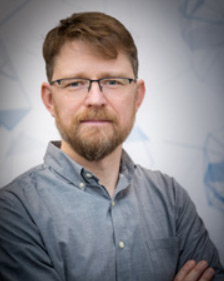 |
Marcin Nowotny, PhD, ProfessorCorrespondence address: |
DEGREES
2020 - Professor of Biological Sciences, nomination by the President of the Republic of Poland
2013 - DSc Habil in Molecular Biology, Institute of Biochemistry and Biophysics, Warsaw, Poland
2002 - PhD in Biochemistry summa cum laude, Nencki Institute of Experimental Biology, Polish Academy of Sciences, Warsaw, Poland (Supervisor: Jacek Kuźnicki)
1998 - MSc in Organic Chemistry and Biochemistry, Department of Chemistry, Warsaw University, Poland
PROFESSIONAL EXPERIENCE
2025 - present - Deputy Director for Science, International Institute of Molecular and Cell Biology in Warsaw, Poland
2008 - present - Professor, Head of the Laboratory of Protein Structure, International Institute of Molecular and Cell Biology in Warsaw, Poland
2017 - 2019 - Co-founder and Chief Scientific Officer, ProBiostructures, International Institute of Molecular and Cell Biology research service center for pharmaceutical industry
2016 - 2018 - Deputy Director for Science, International Institute of Molecular and Cell Biology in Warsaw, Poland
POSTDOCTORAL TRAINING
2003-2008 - Postdoctoral Fellow, Wei Yang Laboratory, National Institute of Diabetes and Digestive and Kidney Diseases, National Institutes of Health, Bethesda, Maryland, USA
MEMBERSHIP AND AWARDS
2024 - Polish Prime Minister Award for scientific achievement
2023 - Jan Karol Parnas Award for the best Polish biochemical publication
2022 - Team Award for scientific achievement by the Minister of Education
2022 - Prize of the Foundation for Polish Science
2019 - Member, European Molecular Biology Organization
2019 - Member, Academia Europaea
2018 - Member, Scientific Policy Committee, Ministry of Science and Higher Education, Poland (in 2020 as a Chair)
2018 - MAESTRO, National Science Centre
2016 - TEAM, Foundation for Polish Science
2015 - Jan Karol Parnas Award for the best Polish biochemical publication (with the group of Prof. Janusz M. Bujnicki)
2013 - Academia Europaea Burgen Scholar
2013 - Knight’s Cross of the Order of Polonia Restituta
2012 - Polish Prime Minister Award for scientific achievement
2012 - Jan Karol Parnas Award for the best Polish biochemical publication
2012 - International Senior Research Fellowship, Wellcome Trust (renewal)
2012 - Early Career Scientist Award, Howard Hughes Medical Institute
2011 - ERC Starting Grant (2012-2017)
2007 - EMBO Installation Grant
2007 - International Senior Research Fellowship, Wellcome Trust
2003 - Prime Minister Award for PhD thesis
2001, 2002 - START Scholarship for Young Scientists, Foundation for Polish Science
DOCTORATES DEFENDED UNDER LAB LEADER’S SUPERVISION
M. Jaciuk, M. Miętus, M. Czarnocki-Cieciura, M. Śmietański, M. Rażew, S. Chamera, M. Gapińska, D. Malik