




Iron is essential for numerous biological processes, including oxygen transport, DNA synthesis, and cellular respiration. However, tight regulation of iron balance is crucial, as both iron deficiency and iron overload can lead to severe health issues. At the Laboratory of Iron Homeostasis, we aim to elucidate iron regulatory mechanisms across tissues and cell types, with a particular focus on iron recycling from erythrocytes and the systemic sensing of body iron burden. Through this work, we advance the understanding of mammalian physiology and the pathogenesis of diseases associated with iron dyshomeostasis.
Research Summary
One major aspect of our research focuses on iron recycling, a process primarily orchestrated by splenic red pulp macrophages, or RPMs, which break down aging erythrocytes and release iron back into the bloodstream. Despite representing the dominant source of bioavailable iron, knowledge about RPM biology and the mechanisms governing iron turnover efficiency remains limited.
Our findings revealed a pronounced impairment of this process during aging. Specifically, we demonstrated that age-associated iron accumulation in RPMs leads to their functional decline and eventual demise, a challenge partially alleviated by dietary iron restriction in mice.
Another major research line explores distinct functional and metabolic adaptations of RPMs in response to iron deficiency, shedding light on how the organism adjusts to restricted iron availability.
In addition, our research identified liver sinusoidal endothelial cells, or LSECs, as the primary cell type responsible for the clearance of free hemoglobin from the circulation, thereby contributing to physiological iron recycling and hemoglobin detoxification, particularly under hemolytic conditions.
Concurrently, we uncovered previously unrecognized mechanisms by which LSECs sense excessive systemic iron levels, including elevated hemoglobin burden. Our work also identified iron-triggered signaling via the transcription factor ETS1 and the p38/JNK MAPK pathway as a mechanism regulating Bmp6 expression, a key iron-sensing component of systemic iron control.
Scientific Impact
- We identified impaired iron recycling as an early hallmark of aging.
- We deciphered how splenic macrophages adapt their phagocytic capacity and metabolism in response to nutritional iron deficiency.
- We revealed an unexpected role of liver endothelium in the clearance of free hemoglobin under both physiological and hemolytic conditions.
- We discovered a novel signaling pathway involved in iron sensing by liver endothelium.
Future Goals
- We will investigate how iron recycling efficiency shapes splenic immune functions and contributes to broader immune homeostasis.
- We aim to establish defective iron recycling as a contributing factor in human disease.
- We will further dissect the links between macrophage metabolism and iron recycling from erythrocytes.
Collaborations
We work closely with peers from the iron metabolism field, researchers in immunology, cancer biology, infectious diseases, and liver physiology, and experts in modern omic technologies to understand how different cell types cooperate to maintain iron balance and support immune function. These collaborations enable us to translate mechanistic insights from mouse models and cellular systems into human-relevant contexts, including primary liver cells.
Comment
In our research, we are driven by the realization that long-standing assumptions about iron biology and macrophage function often capture only part of the underlying reality. By looking closely at how individual cell types, such as splenic macrophages and liver endothelial cells, adjust their clearance functions, signaling, and metabolism to changing iron availability, we see that iron homeostasis is not a fixed program but a highly plastic, cell-type-specific process. Each time we revisit pre-existing concepts through the lens of metabolic rewiring and tissue context, we uncover new layers of organization that reveal how elegantly systemic iron balance is maintained. - Katarzyna Mleczko-Sanecka, PhD
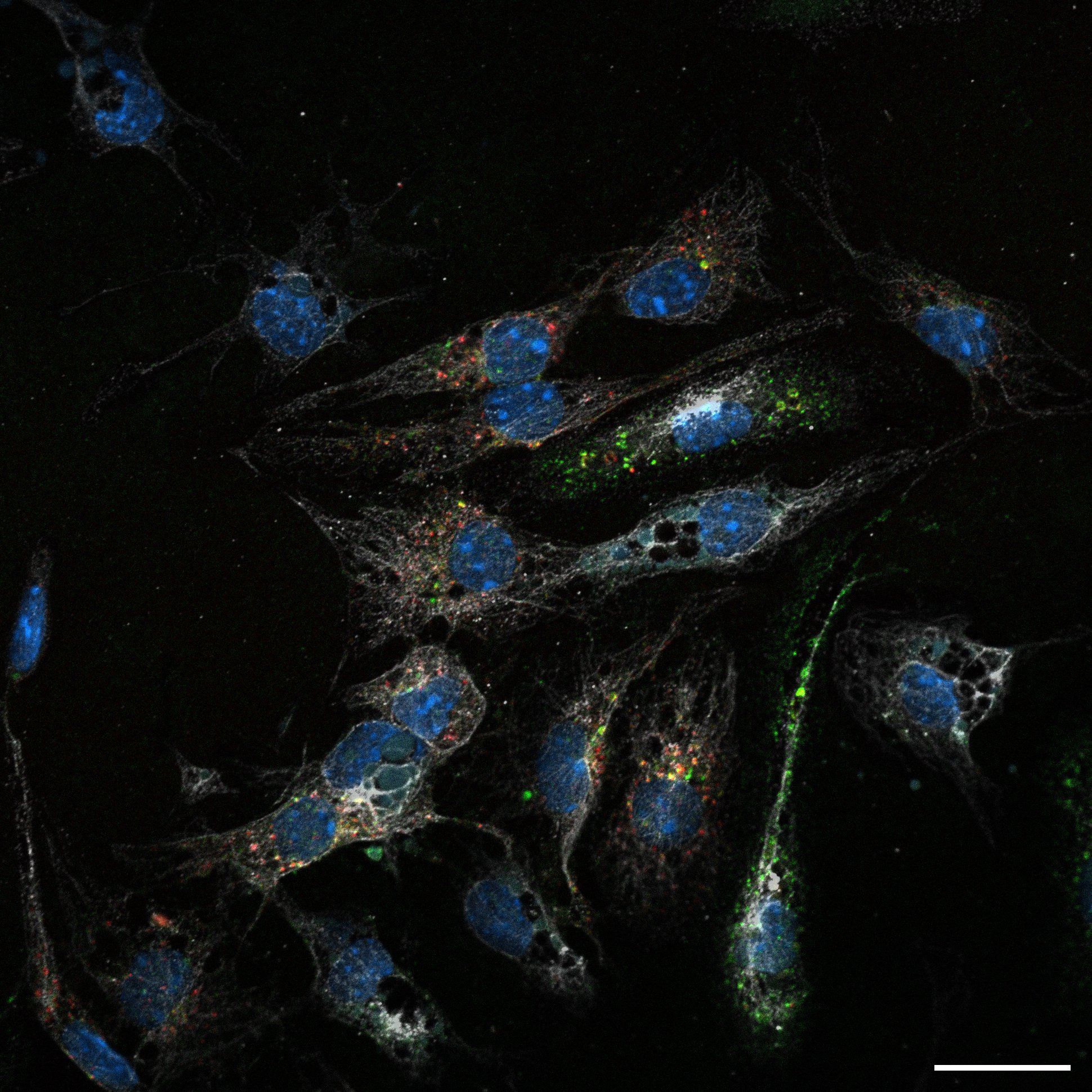
Primary murine LSECs performing uptake of fluorescently labeled hemoglobin. Illustration by Aneta Jończy.
Publications and preprints from this group
Browse publications →
Lab Leader
Katarzyna Mleczko-Sanecka, PhD
Post-doc
Pratik Kumar Mandal, PhD
PhD Students
Raghunandan Mahadeva, MSc
Umm E Laila, MSc
Research Specialist
Marta Niklewicz, MSc
Laboratory Support Specialist
Patrycja Rojek, PhD
 |
Katarzyna Mleczko-Sanecka, PhDCorrespondence address: |
DEGREES
2011 - PhD in Biology, European Molecular Biology Laboratory (EMBL) Heidelberg and Heidelberg University, Germany
2007 - MSc in Biotechnology, Faculty of Biochemistry, Biophysics and Biotechnology, Jagiellonian University, Cracow, Poland
PROFESSIONAL EXPERIENCE
2017-present - Professor, Head of Laboratory of Iron Homeostasis, International Institute of Molecular and Cell Biology in Warsaw, Poland
2011-2015 - Postdoctoral research with Prof. Martina Muckenthaler and Prof. Matthias W. Hentze, Molecular Medicine Partnership Unit, European Molecular Biology Laboratory and Heidelberg University, Heidelberg, Germany
2007-2011 - Doctoral research with Prof. Martina Muckenthaler and Prof. Matthias W. Hentze, Molecular Medicine Partnership Unit, European Molecular Biology Laboratory and Heidelberg University, Heidelberg, Germany
2006-2007 - Master thesis research with Prof. Józef Dulak and Prof. Alicja Józkowicz, Department of Medical Biotechnology, Jagiellonian University, Cracow, Poland
2006 - Undergraduate research during Erasmus fellowship with Dr. Claudine Kieda, Centre De Biophysique Moleculaire, Centre National de la Recherche Scientifique, Orleans, France
2005 - Undergraduate research during Erasmus scholarship with Dr. Claudine Kieda, Centre De Biophysique Moleculaire, Centre National de la Recherche Scientifique, Orleans, France
HONORS, PRIZES AND AWARDS
2023 - Awarded as a Co-investigator in the American Federation for Aging Research (AFAR) grant
2023 - Gunshin Levy Award from the BioIron Society
2021 - NCN SONATA BIS 10 Grant
2020 - Scholarship of the Minister of Science and Higher Education for Outstanding Young Scientist
2019 - NCN OPUS 16 Grant
2016 - POLONEZ, National Science Centre
2014 - Independent research grant, University of Heidelberg
2011 - Invitation to 61st Lindau Meeting of Nobel Laureates, Lindau, Germany
2015, 2014, 2011-2009 - Travel Grant to attend and present data at the international conferences in iron biology
2007 - Louis-Jeantet PhD Scholarship for young researchers from Eastern Europe to support PhD studies at European Molecular Biology Laboratory
2006 - Erasmus Scholarship, Centre National de la Recherche Scientifique, Orleans, France