




A major focus of our research is neuronal morphology, because neuronal shape is a key determinant of function. To better understand the molecular mechanisms underlying neuronal development, we study the function of the mTOR kinase. However, neuronal architecture changes not only during development but also during aging and disease processes in the adult brain, including depression. For this reason, in recent years we have also focused on molecular mechanisms that stabilize dendrites and on how this stability is disrupted in the mature nervous system.
Research Summary
Since the establishment of the laboratory, we have studied the role of the mTOR kinase in neurons, particularly in nervous system development. Dysregulation of mTOR activity leads to neurodevelopmental disorders such as tuberous sclerosis complex. mTOR is a central regulator of cellular metabolism: it integrates information about cellular energy status, amino acid availability, and extracellular signals, including trophic factors.
In recent years, our work has addressed mTOR-dependent processes such as translation, transcription, autophagy, and intracellular trafficking. All of these processes are important for proper neuronal development and function. We now focus particularly on mTOR functions in the cell nucleus - a non-canonical and still poorly characterized localization. We have shown that in neurons, mTOR accumulates in the nucleus in response to increased neuronal activity.
In parallel, we study mechanisms responsible for the stability of mature neuronal morphology. In this area, we identified mTOR as one of the key regulators. We have also discovered new proteins involved in stabilizing neuronal architecture, including ITPKA, whose molecular functions in this context are now under investigation.
Scientific Impact
- Demonstrating that inhibition of mTOR activity via activation of autophagy regulates lysosome transport along microtubules.
- Identifying dilazep and penbutolol through screening approaches as candidate antidepressant compounds; a patent application is pending.
- Advancing knowledge of non-canonical functions of mTOR in the neuronal cell nucleus.
- Identifying new proteins involved in dendritic stabilization and destabilization in the adult nervous system
Future Goals
Our main goal for the coming years is the comprehensive characterization of nuclear mTOR in brain development, physiology, and pathology. We aim to determine how this non-canonical pool of mTOR affects neuronal function and how its disruption may contribute to diseases of the nervous system.
In parallel, we will continue to investigate the molecular mechanisms controlling dendritic stability and destabilization in the adult nervous system, particularly in the context of depression and other disorders associated with altered neuronal architecture.
Collaborations
Our key collaborators include Prof. Kathrin Thedieck, Prof. Sergiusz Jóźwiak, Prof. Katarzyna Kotulska, Prof. David Kwiatkowski, Prof. Eleonora Aronica, Prof. Leszek Kaczmarek, and Prof. Ewelina Knapska. Together, we work to understand how molecular mechanisms translate into clinical features of tuberous sclerosis complex and depression, and how this knowledge can be used to help patients.
Awards and Recognition
2020 - Polish Prime Minister Award for scientific achievement
2021 - 2nd Division (Biological Sciences) of Polish Academy of Sciences Award for a series of publications on mTOR and novel therapeutic targets in TSC
2023 - election to the European Molecular Biology Organization
2024 - Herbert Resner Award for research that demonstrated a potential new therapy for tuberous sclerosis.
2025 - election to the Polish Academy of Sciences
Comment
"Our research focuses on the molecular basis of the development and stability of neuronal networks. In particular, we focus on the molecular functions of the mTOR protein, which may enable better diagnosis and potential therapy of mTORopathies, diseases caused by mTOR hyperactivity," says Prof. Jacek Jaworski.
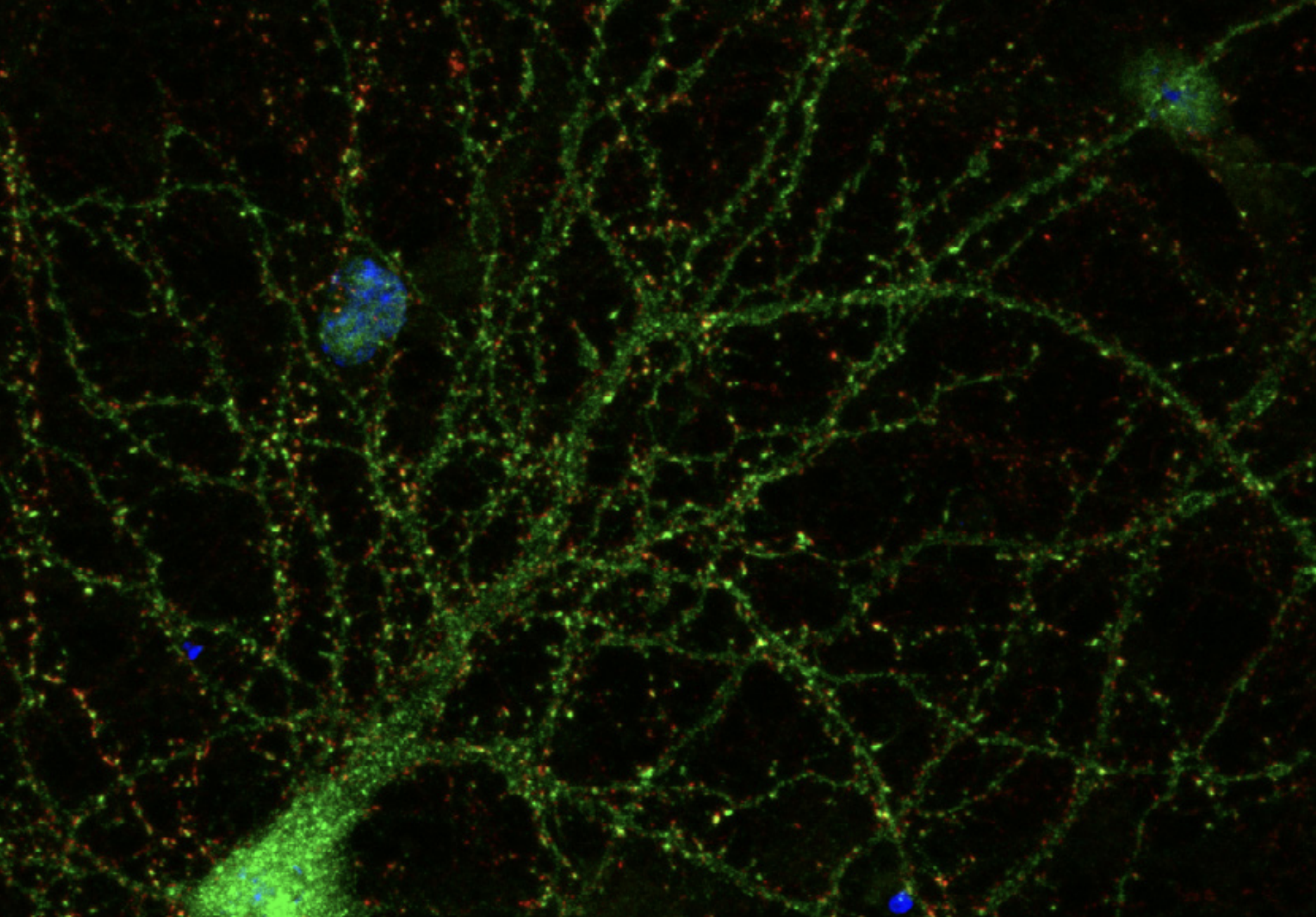
Rat hippocampal neurons cultured in vitro. Immunofluorescence labeling shows GluA1 in green, Bassoon in red, and cell nuclei in blue. Illustration by Karolina Protokowicz.
Publications and preprints from this group
Browse publications →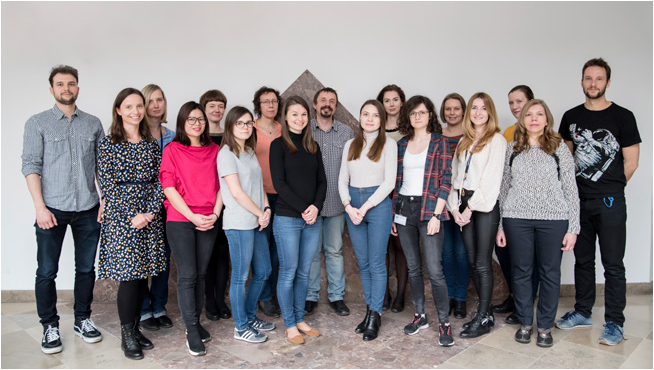
Lab Leader
Jacek Jaworski, PhD, Professor
Senior Researchers
Ewa Liszewska, PhD
Małgorzata Urbańska, PhD
Postdoctoral Researchers
Roberto Pagano, PhD
Research Specialist
Katarzyna Machnicka, MSc
Katarzyna Durczyńska, MSc
Shiwani Kumari, PhD
PhD Students
Katarzyna Orzoł, MSc
Hemasri Kilaru, MSc
Lab Technician
Alina Zielińska, BSc
Laboratory Support Specialist:
Angelika Jocek, MSc
Volunteers
Julia Łukasiewicz
Gabriela Chmurzyńska
Wiktoria Kowalska
Karolina Protokowicz, PhD
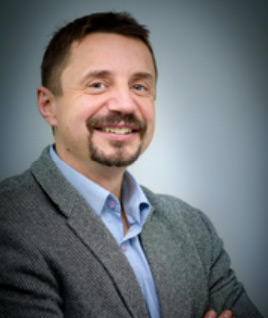 |
Jacek Jaworski, PhD, ProfessorCorrespondence address: |
DEGREES
2014 - Professor of Biological Sciences, nomination by the President of the Republic of Poland
2010 - DSc Habil in Molecular Biology, Warsaw University, Poland
2001 - PhD in Molecular Neurobiology, Nencki Institute of Experimental Biology, Polish Academy of Sciences, Warsaw, Poland
1996 - MSc in Biology, Department of Genetics, Warsaw University, Poland
PROFESSIONAL EXPERIENCE
2018-present - Deputy Director for Science, International Institute of Molecular and Cell Biology in Warsaw, Poland
2010 - 2013 - Deputy Director, International Institute of Molecular and Cell Biology in Warsaw, Poland
2005-present - Professor, Head of Laboratory of Molecular and Cellular Neurobiology, International Institute of Molecular and Cell Biology in Warsaw, Poland
RESEARCH TRAINING
2016 - Research visit (3 weeks) with Prof. William Harris, Cambridge University, Cambridge, UK
2011 - Research visit (2 weeks) with Dr. Carlo Sala, CNR Institute of Neuroscience and Instituto Neurologico Carlo Besta, Milan, Italy
2006 - Research visit (1 month) with Dr. C.C. Hoogenraad, Erasmus Medical Center, Rotterdam, Holland
2002-2005 - Postdoctoral Associate with Prof. Morgan Sheng, Picower Center for Learning and Memory, Massachusetts Institute of Technology and Howard Hughes Medical Institute, Cambridge, MA, USA
2000 - Research training with Dr. J. Guzowski, ARL Division of Neural Systems, Memory and Aging, University of Arizona, Tucson, USA
1997-2001 - Research training (7 months) with Prof. J. Mallet, Laboratoire de Genetique Moleculaire de la Neurotransmission et des Processus Neurodegeneratifs (LGN), UMR 9923 CNRS, Paris, France
1996-2002 - PhD student (until 2001) and Postdoctoral Associate (until May 2002) with Prof. L. Kaczmarek, Laboratory of Molecular Neurobiology, Nencki Institute of Experimental Biology, Polish Academy of Sciences, Warsaw, Poland
1995-1996 - Master’s degree, Prof. P. Węgleński, Department of Genetics, Warsaw University, Poland
FELLOWSHIPS AND AWARDS
2018 - TEAM, Foundation for Polish Science
2014 - Master Award, Foundation for Polish Science
2011 - Prime Minister Award for habilitation thesis
2009 - 2nd Division (Biological Sciences) of Polish Academy of Sciences Award for series of publications on MMP9 (together with teams of Prof. Kaczmarek and Dr. Wilczynski)
2005 - Konorski Award for best publication of 2004 in the field of neuroscience (Kowalczyk et al., JCB, 2004, 167:209-213), Polish Neuroscience Society and Polish Academy of Sciences
2002 - Prime Minister Award for PhD thesis
2001 - Foundation for Polish Science National Scholarship for Young Investigators (1 year scholarship)
2000 - EMBO Short Term Fellowship
1999 - Polish Network for Cell and Molecular Biology UNESCO/PAN Scholarship
1997 - Bourse de Stage du Gouvernement Francaise (French Government Scholarship)
MEMBERSHIP IN SCIENTIFIC SOCIETIES, ORGANIZATIONS, AND PANELS
2019 - Member, Scientific Advisory Board of the Institute of Pharmacology, Polish Academy of Sciences
2017 - Vice President, Polish Neuroscience Society (term 2017-2019)
2015 - Corresponding Member, Warsaw Scientific Society
2015 - Member, Scientific Advisory Board of the Nencki Institute of Experimental Biology, Polish Academy of Sciences
2011 - Member, Neurobiology Committee, Polish Academy of Sciences (terms 2011-2014; 2015-2018; 2019-2020)
DOCTORATES DEFENDED UNDER LAB LEADER’S SUPERVISION
Ł. Świech, A. Malik, M. Perycz, M. Urbańska, A. Skałecka, J. Lipka, A. Urbańska, M. Firkowska, K. Kisielewska, A. Kościelny.