




One of the priorities of IIMCB is to foster a working environment in which all individuals are treated equally, with respect and with fairness. Accordingly, the Director of IIMCB established a Working Group on Gender Equality Opportunities, which included representatives of researchers at all career levels and representatives of the administration. The responsibilities of the group shall include, in particular, the preparation of a gender equality plan for IIMCB, coordination of the implementation of activities in the area of gender equality and advice on geneder equality issues.
We present to you the Gender Equality Plan for the International Institute of Molecular and Cell Biology in Warsaw (hereafter referred to as IIMCB or the Institute) for the period 2022-2025 (hereafter referred to as the "Gender Equality Plan"). The Gender Equality Plan was prepared for the entire IIMCB community - persons employed on the basis of an employment contract, PhD students, MSc students and volunteers associated with IIMCB:
- Default
- Title
- Date
- Random





Stanford University, USA
Chair of the Board

University of Würzburg, Germany

Gulbenkian Institute for Molecular Medicine, Portugal

Cold Spring Harbor Laboratory, USA

Max Planck Institute for Heart and Lung Research, Germany

Foundation of the Swiss
Institute for Experimental
Cancer Research, Switzerland

Center for Genomic
Regulation, Spain
Secretary of the Board

Max Planck Institute for Multidisciplinary Sciences, Germany

University of Cambridge, United Kingdom, California Institute of Technology, USA

Max Planck Institute of Biochemistry, Germany

University of Strasbourg, France

Jagiellonian University, Poland

University of Pennsylvania, USA

Tufts University, USA
Międzynarodowy Komitet Doradczy
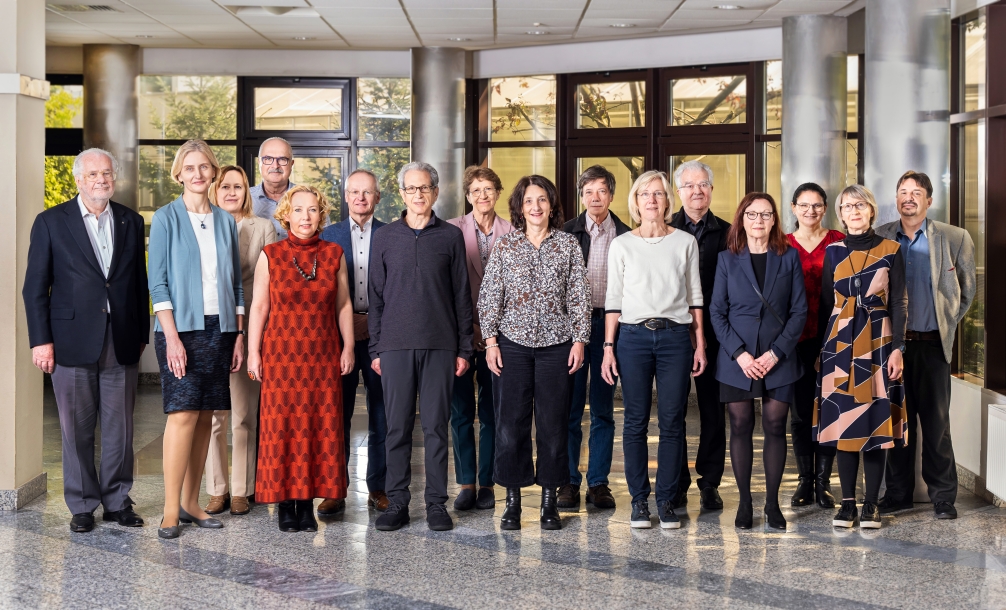
Międzynarodowy Komitet Doradczy i Dyrekcja MIBMiK
Międzynarodowy Instytut Biologii Molekularnej i Komórkowej w Warszawie (IIMCB) kształci doktorantów w ramach Warszawskiej Szkoły Doktorskiej Nauk Ścisłych i BioMedycznych (Warsaw-4-PhD) oraz przeprowadza procedurę nadania stopnia doktora.
|
Szkoła Warsaw-4-PhD została utworzona przez dziewięć warszawskich instytucji naukowych i oferuje kształcenie doktorantów w czterech dyscyplinach: biologii, chemii, fizyce oraz naukach medycznych. Kandydaci aplikują do wybranych projektów badawczych realizowanych przez poszczególne jednostki. |
Doktorat w IIMCB
- Oferujemy możliwość realizacji projektów badawczych z zakresu biologii RNA i biologii komórki oraz przeprowadzenia pełnego procesu nadania stopnia doktora bezpośrednio w IIMCB – od kształcenia po obronę rozprawy.
- Nabór prowadzimy trzy razy w roku i ma on formę otwartego konkursu międzynarodowego. Kształcenie rozpoczyna się w semestrze zimowym lub letnim.
- Każdy doktorant realizuje indywidualny plan badawczy pod kierunkiem promotora. W połowie okresu kształcenia przeprowadzana jest ocena śródokresowa.
Dla kogo?
- Osoby posiadające tytuł magistra lub równoważny,
- Zainteresowane prowadzeniem badań naukowych w obszarze nauk biologicznych oraz
- Posługujące się językiem angielskim w stopniu umożliwiającym pracę w międzynarodowym środowisku badawczym.
Co oferujemy?
- Bezpłatne kształcenie w szkole doktorskiej
- Stypendium w wysokości 5 500 zł przed oceną śródokresową i 6 000 zł po ocenie śródokresowej oraz wsparcie Działu Grantów w aplikowaniu o dodatkowe źródła finansowania
- Opiekę merytoryczną i mentoring – indywidualną współpracę z promotorem oraz wsparcie zespołu badawczego
- Wykwalifikowaną kadrę naukową prowadzącą badania publikowane w renomowanych czasopismach międzynarodowych
- Międzynarodowe środowisko pracy – językiem komunikacji jest angielski
- Kompleksowe wsparcie dla cudzoziemców – pomagamy uzyskać wizę, zalegalizować pobyt oraz dopełnić wszystkich innych formalności
- Możliwość rozwoju międzynarodowego poprzez udział w konferencjach, warsztatach, stażach zagranicznych, z dofinansowaniem wyjazdów
- Wsparcie administracyjne Biura Spraw Doktoranckich
- Świadczenia zdrowotne i socjalne – dofinansowanie prywatnej opieki medycznej, karty sportowej, szkoleń, wydarzeń kulturalnych i dodatkowe benefity dostępne na zasadach obowiązujących pracowników IIMCB
- Udział w dialogu instytucjonalnym – przedstawiciele doktorantów uczestniczą w regularnych spotkaniach z dyrekcją i Międzynarodowym Komitetem Doradczym.
Jak aplikować?
- Najbliższa rekrutacja rozpocznie się 18 grudnia 2025 r. i potrwa do 6 stycznia 2026 r. Wtedy też na stronie Instytutu w dziale aktualności zamieścimy informację o projektach badawczych na które można aplikować.
- Więcej informacji o samym procesie aplikacji można znaleźć na stronie Szkoły Warsaw-4PhD https://warsaw4phd.eu
Kontakt
Agnieszka Faliszewska,
Zastępca Kierownika Działu Kadr
Ten adres pocztowy jest chroniony przed spamowaniem. Aby go zobaczyć, konieczne jest włączenie w przeglądarce obsługi JavaScript.
Jednym z priorytetów MIBMiK jest wspieranie środowiska pracy, w którym wszystkie osoby są traktowane jednakowo, z szacunkiem i uczciwością. W związku z tym Dyrektor MIBMiK powołał grupę roboczą ds. równości szans płci, w której skład weszli przedstawiciele naukowców na wszystkich szczeblach kariery oraz przedstawiciele administracji. Do zadań grupy należy, w szczególności, przygotowanie planu równości szans płci dla MIBMiK, koordynacja realizacji działań w obszarze równości szans płci oraz doradztwo w tym zakresie.
W skład grupy wchodzą:
-
Katarzyna Fiedorowicz - Kierownik Działu Zarządzania Zasobami Ludzkimi - Przewodniczący,
-
Gracjan Michlewski – reprezentant kierowników laboratoriów,
-
Mariusz Czarnocki-Cieciura – reprezentant postdoków, badaczy i starszych badaczy,
-
Karim Abu Nahia – reprezentant doktorantów,
-
Dorota Wasiak-Libiszowska – Kierownik Działu Grantów,
-
Agnieszka Faliszewska – Zastępca Kierownika Działu Zarządzania Zasobami Ludzkimi.
-
August 4, 2021 - Start of the recruitment
-
August 18, 2021 - Deadline for documents submission
Research projects for admissions 2021/2022-5:
-
Genomics and Epigenomics of acute myelogenous leukemia (AML), Professor Matthias Bochtler
-
Poly(A) tails - central hubs of mRNA stability control, Professor Andrzej Dziembowski
Genomics and Epigenomics of acute myelogenous leukemia (AML)
Supervisor: Professor Matthias Bochtler
Institute: International Institute of Molecular and Cell Biology in Warsaw
Laboratory: Laboratory of Structural Biology
Epigenomic changes play a prominent role in acute myelogenous leukemia (AML). Mutations in the methyltransferase DNMT3A and the dioxygenase TET2 are among the most frequent alterations in this type of malignancy. It has been proposed that defects in epigenomics entail DNA repair defects, which in turn lead to karyotype degradation. This contrasts with information from the Cancer Genome Atlas and the COSMIC database, which both identify AML as a typical M-type malignancy, i.e. a malignancy that is driven by mutations, rather than by copy-number variation. However, clinical observation suggests that a considerable fraction of AML patients have karyotype aberrations. In some cases, the chromosomal changes can be drastic and resemble the chromothripsis seen in other malignancies. Highly karyotype aberrant AMLs are poorly characterized. It is not clear whether the spectrum of exome mutations is similar in these leukemias and in M-type leukemias and what drives the karyotype degradation. It is also unclear whether changes in the epigenomic machinery and their possible effects on DNA signaling play a role in this process. We hope to clarify these issues, primarily by sequencing approaches, in collaboration with clinicians in Heidelberg and Dresden (Germany).
Aim
The aim of the project is to obtain deep sequencing data for AML patients (bulk and single cell). We plan to compare the spectrum of mutations and copy number variation in highly aberrant and normal karyotype AMLs. We plan to test if the spectrum of mutations in the coding genome and tumor clonal histories are similar in the two types of AML. We want to learn if mutations in the epigenomic enzymes cause DNA repair phenotypes, which could ultimately lead to karyotype degradation.
Requirements:
-
Master's degree in biology, biochemistry or a related field
-
Eligibility for PhD studies in Poland
-
Theoretical knowledge of genetics and epigenetics.
-
Practical experience with cellular fractionation by FACS.
-
Experience with preparation of libraries for DNA sequencing using Nanopore and Illumina technologies.
-
Experience with genotyping (high resolution melting analysis).
-
Experience with or at least interest in bioinformatic analysis of deep sequencing data.
-
Written and spoken fluency in English
-
Willingness to learn and take new challenges, ability to work independently, analytical thinking
-
Good interpersonal skills and a collaborative attitude
Number of positions available: 1
Contact: Ten adres pocztowy jest chroniony przed spamowaniem. Aby go zobaczyć, konieczne jest włączenie w przeglądarce obsługi JavaScript., Ten adres pocztowy jest chroniony przed spamowaniem. Aby go zobaczyć, konieczne jest włączenie w przeglądarce obsługi JavaScript.
Poly(A) tails - central hubs of mRNA stability control
Supervisor: Professor Andrzej Dziembowski
Institute: International Institute of Molecular and Cell Biology in Warsaw
Laboratory: Laboratory of RNA Biology
Project description:
Gene expression is regulated at multiple levels. Our lab is interested in the regulation of mRNA stability, especially through the modifications of poly(A) tails.
Recently, we have shown that the addition of untemplated uridines to the 3’ end of LINE1 retrotransposons precludes their propagation (Warkocki et al. Cell 2018). Moreover, we have identified a family of poly(A) polymerases TENT5, which reside in the cytoplasm and enhance the expression of mRNAs encoding secreted proteins (Moczek et al. Nature com. 2017; Bilska et al. Nature com. 2020; Gewartowska et al. Cell reports 2021). Those enzymes are differentially expressed in tissues and organs, affecting several aspects of animal physiology. TENT5C is an onco-suppressor in multiple myeloma and control immunoglobulin expression in B cells. TENT5A is essential for collagen secretion, and its mutations lead to congenital bone disease.
To study the dynamics of poly(A) tails genome-wide, we have implemented a Direct RNA sequencing Nanopore methodology. It is now widely used in our projects, and we also collaborate with other laboratories interested in post-transcriptional gene expression regulation (for instance, Scheer et al. Nature com. 2021). Moreover, we use Direct RNA sequencing to look globally at the regulation of poly(A) tails (Tudek et al. Nature com., under revision).
In the future, we will continue to study the role and mechanism of action of TENT5 poly(A) polymerases, analyze global control of poly(A) tail lengths and develop bioinformatics tools for Direct
RNA sequencing. Finally, we are planning to translate our knowledge out poly(A) tails for the design of mRNAs, which are more stable and better translated, which will be very valuable for mRNA-based therapeutics such as mRNA vaccines.
Aim:
The exact nature of the project will depend on the skills, predispositions, and interests of the selected PhD student. It may focus on:
-
functional analysis of the TENT5A poly(A) polymerases in transgenic mouse models generated in-house using CRISPR/Cas9 methodology.
-
mastering of the DRS methodology in either the experimental part or bioinformatic analysis.
-
analysis of principles of mRNA stability control and design of more efficient mRNA based therapeutics
Requirements:
-
Master's degree in biology, biochemistry or related field
-
Eligibility for PhD studies in Poland
-
Highly talented individuals who are passionate about research and are full of scientific curiosity
-
Experience in either: molecular biology/transcriptomics, animal models, bioinformatic analysis of transcriptomic data, will be a clear benefit
-
Written and spoken fluency in English
-
Willingness to learn and take new challenges, ability to work independently, analytical thinking
-
Good interpersonal skills and a collaborative attitude
Number of positions available: 2
Contact: Ten adres pocztowy jest chroniony przed spamowaniem. Aby go zobaczyć, konieczne jest włączenie w przeglądarce obsługi JavaScript.
Experimental analysis of molecular determinants involved in epilepsy (NCN/OPUS)
Supervisor: Professor Jacek Kuźnicki, auxiliary supervisor/PI: Vladimir Korzh, PhD
Institute: International Institute of Molecular and Cell Biology in Warsaw
Laboratory: Laboratory of Neurodegeneration
Project description:
The effects of KCNB1 mutations that cause epileptic encephalopathy were analyzed mechanistically mainly using electrophysiology in heterologous cells in vitro. The developmental analysis was limited by the availability of single mutants in mice and zebrafish and did not explore the whole range of effects caused by KCNB1 mutations (Shen et al., 2016). The KCNB1 loss of function (LOF) or gain of function (GOF) cause specific morphological changes in the brain ventricles (Shen et al., 2016) and inner ear (Jedrychowska et al., 2020) in developing zebrafish embryos and larvae. The zebrafish transgenics express fluorescent markers in specific manner. The high-resolution microscopy of transgenic embryos and larvae in vivo provides information about developmental mechanisms as well as changes in activity of specific signaling pathways. These tools satisfy conditions necessary to study the developmental effect of different KCNB1 mutations in real time. This rationale was confirmed in preliminary experiments when analyzing the effect of overexpression of human mutated KCNB1 mRNA. Kcnb1 GOF causes cell delamination in brain ventricles and their expansion (hydrocephalus), and enlargement of the inner ear and otoliths. These features recapitulate the phenotype of the kcnb1 GOF zebrafish mutant and constitute the rationale for the "brain and ear" in vivo test to be used when defining an effect of human mutations.
Aim:
Using the site-specific CRISPR-Cas9 mutagenesis in zebrafish, the representative Kcnb1 mutations that mimic the known human mutations of KCNB1 will be generated and analyzed by a combination of bioimaging, single-cell transcriptomics, electrophysiology and behavioral analysis. This will provide rationale for subfunctionalization of human KCNB1 mutations.
Requirements:
-
Master's degree in biology, biochemistry or related field
-
Eligibility for PhD studies in Poland
-
Prior experience in molecular developmental biology and zebrafish studies is a bonus during selection of candidates, but necessary training will be provided
-
Written and spoken fluency in English
-
Willingness to learn and take new challenges, ability to work independently, analytical thinking
-
Good interpersonal skills and a collaborative attitude
Number of positions available: 2
Contact: Vladimir Korzh
Identifying unique adaptive responses of red pulp macrophages to iron deficiency (NCN/SONATA)
Supervisor: Wojciech Pokrzywa, PhD DSc, auxiliary supervisor, PI: Katarzyna Mleczko-Sanecka, PhD
Institute: International Institute of Molecular and Cell Biology in Warsaw
Laboratory: Laboratory of Iron Homeostasis
Project description:
Iron deficiency is a global health burden with profound socio-medical impacts, but little is known about how functions of specialized cells are affected by low systemic iron levels. Red pulp macrophages (RPMs) residing in the spleen are responsible for removing aged erythrocytes from the bloodstream. Following erythrocyte lysis, RPMs release iron to the circulation to replenish the pool of serum iron necessary for sustaining erythropoiesis. RPMs are thus critical for maintaining blood and iron homeostasis in the body. Interestingly, it was largely unknown if and how key cellular functions of RPMs are affected by low body iron status. Using a mouse model of nutritional iron deficiency, we uncovered that iron deficiency triggers specific but still elusive signaling mechanisms that modulate RPMs’ phagocytic and metabolic functions. We expect that these newly identified responses likely contribute to the adaptation of the whole organism to limited iron supplies. Within our project, we apply both in vivo and in vitro approaches to decipher the molecular mechanism responsible for the adaptive functional ‘rewiring’ of RPMs in iron deficiency and determine their physiological role for the whole organism. The new knowledge generated by this research is expected to significantly advance our understanding of an organism’s adaptation to iron deficiency.
Aim:
We aim to comprehensively characterize the functional adaptation of RPMs to iron deficiency and identify its molecular triggers. We will explore how the abrogation of this ‘adaptation program’ affects the organism, including iron and blood homeostasis. To this end, we will create and characterize new conditional knock-out mice characterized by specific suppression of the RPMs’ adaptation to low iron conditions.
Requirements:
-
Master's degree in biology, biochemistry or related field
-
Eligibility for PhD studies in Poland
-
Interests in molecular aspects of physiology, motivation for experimental work, passion for science, hands-on experience in laboratory work
-
Experience in mouse/rat-based studies or willingness to work with animals
-
Written and spoken fluency in English
-
Willingness to learn and take new challenges, ability to work independently, analytical thinking
-
Good interpersonal skills and a collaborative attitude.
-
Research achievements (eg, publications or manuscripts in preparation) and experience abroad will be of advantage
Number of positions available: 1
Contact: Katarzyna Mleczko-Sanecka